
What Does a Full Lead Generation System Cost per Month

Your company has been running marketing in bursts for the past two years. A Google Ads campaign in Q1 generated leads for 6 weeks, then went quiet when the budget ran out. A content push in Q2 that produced blog traffic but no pipeline. A cold outreach experiment in Q3 that booked some meetings but dried up when the contractor moved on. A webinar in Q4 that filled the calendar for a week and then left nothing behind. Each initiative produced a temporary spike followed by a return to baseline. You sat down with your leadership team at the start of this year and looked at the pattern: four quarters, four separate efforts, four spikes, four collapses. Total leads across the year looked respectable in aggregate. Month-to-month reality was chaos. Your CEO put it simply: “We can’t keep starting from zero every quarter. What would it cost to just have leads coming in every month?”
That question marks the shift from campaign thinking to system thinking. And it is the right question, because the cost of inconsistency, the wasted effort, the lost learning, the unpredictable pipeline, the stressed sales team that never knows what next month looks like, is almost certainly more expensive than the system itself.
Most companies address this question by collecting vendor quotes. They compare monthly fees, pick a number that feels reasonable, and hope for the best.
Price comparison without understanding the system is guesswork with a budget. The cost of a full lead generation system depends entirely on what it needs to do, how complex the buyer journey is, and what infrastructure already exists. The number only makes sense when you understand what it buys.
Let me break down what a full lead generation system actually is, what it costs at different levels, and what you are paying for when it is done properly. But there is a cost that never appears in any vendor proposal that most companies are already paying, so read on.
What a Full System Actually Includes
A full lead generation system is not a campaign. It is not a single funnel. It is not a cold outreach tool with a landing page attached. Those are components. A full system is the infrastructure that consistently and predictably produces leads month after month, without requiring the team to start from scratch each quarter.
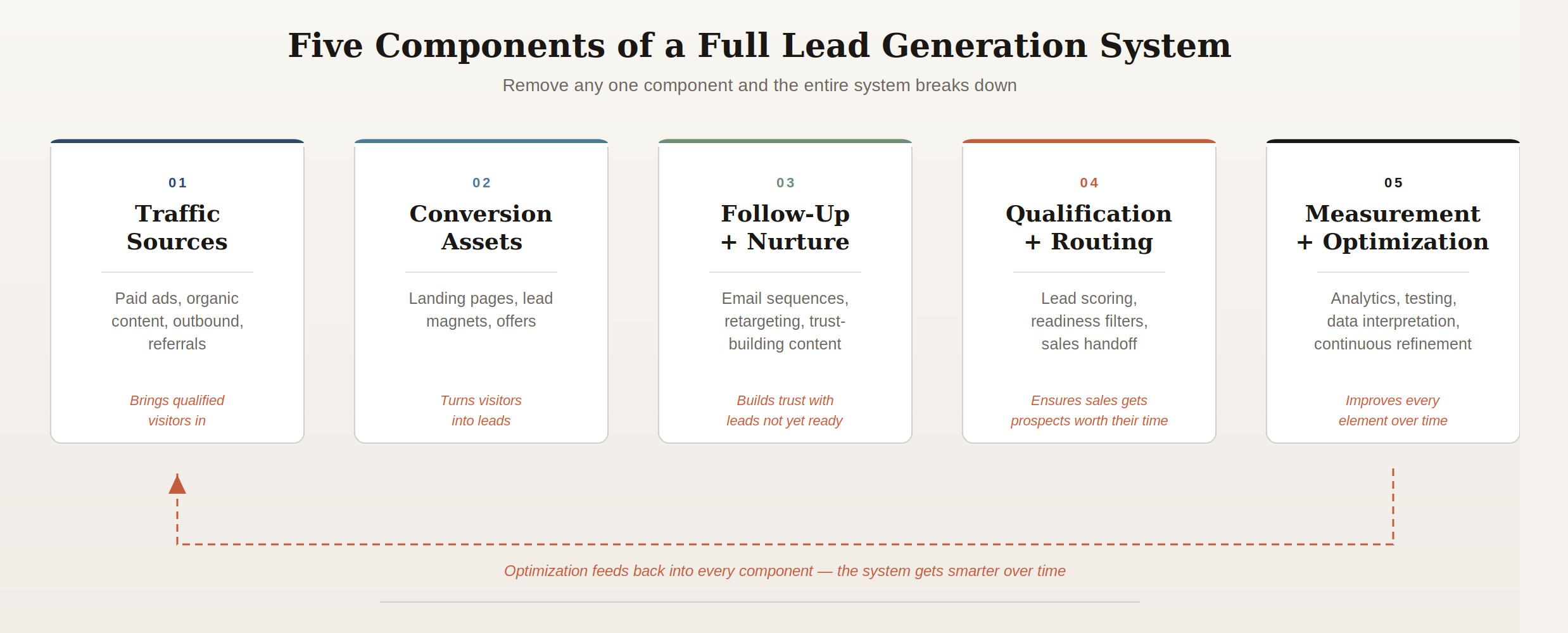
At a minimum, a real lead generation system includes five interconnected elements. Traffic sources that bring qualified visitors into the system through paid channels, organic content, outbound, or referrals. Conversion assets like landing pages, lead magnets, and offers that turn visitors into leads. Follow-up and nurturing that build trust with leads who aren’t ready for sales yet. Qualification and routing that filter leads by readiness and direct them to the right next step. And measurement and optimization that use data to continuously improve every element.
If any one of those five pieces is missing, the results become volatile. You can run great ads, but without follow-up, leads go cold. You can create compelling content, but without conversion assets, traffic never becomes a pipeline. You can capture leads efficiently, but without qualification, sales wastes time on prospects who aren’t ready.
Think of it like a production line. Each station does one job. Remove one station and the entire line breaks down. Most companies have one or two pieces in place. They run ads but have no nurture system. They create content but have no conversion path. They capture leads but never qualify them. Partial systems produce partial results, and partial results feel like failure even when the pieces that exist are working.
Why Monthly Cost Is the Right Way to Think About This
Many businesses ask for a total price. A one-time number that covers everything. That question reflects project thinking, and lead generation is not a project.
Lead generation systems run continuously. They adapt to market changes. They improve through optimization. They respond to shifts in buyer behaviour. That is why cost is almost always structured monthly.
Monthly investment covers ongoing traffic generation or management, continuous conversion optimization, follow-up sequencing and refinement, lead quality monitoring, data interpretation, and the constant adjustments that keep performance improving rather than plateauing.
Systems that stop being actively managed decay quickly. Traffic sources shift. Ad costs fluctuate. Buyer behaviour evolves. Competitors adjust their approaches. A system that was performing well three months ago produces different results today if nobody is watching and refining.
The monthly cost matches the ongoing nature of the work. It funds the continuous effort that keeps the system healthy and improving over time.
The Three Investment Levels
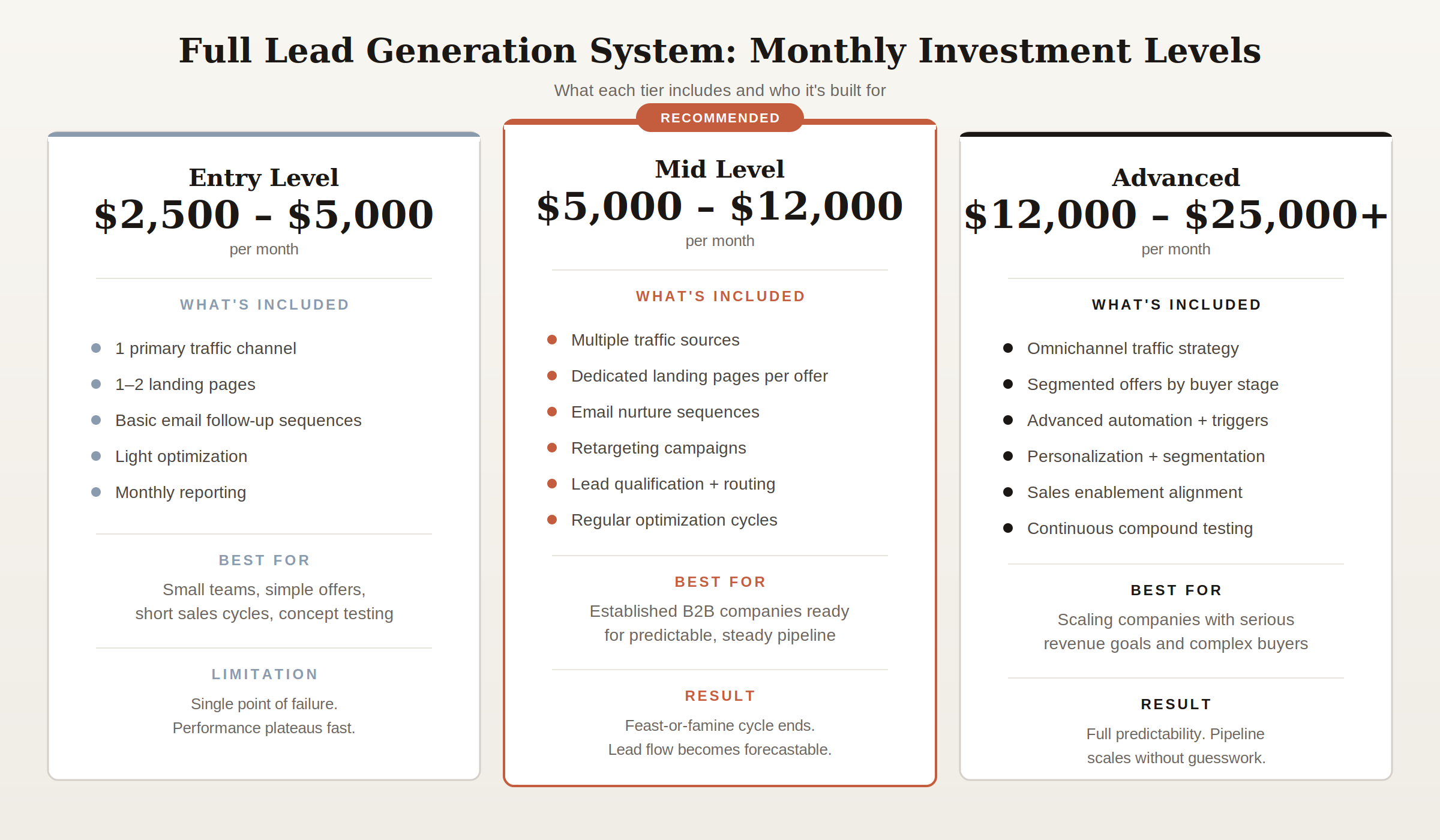
Here is what B2B companies are actually paying in 2026.
An entry-level lead generation system costs between $2,500 and $5,000 per month. This is the baseline. It typically includes one primary traffic channel, one or two conversion assets like a landing page and a lead magnet, basic follow-up sequences, and light optimization. This can work for small teams with simple offers and short sales cycles. It proves a concept and gets leads flowing. But the limitations appear quickly. One traffic channel means one point of failure. Basic follow-up means most leads go cold before they are ready. Light optimization means performance plateaus fast. Entry-level systems are functional for testing but don’t scale sustainably.
A mid-level lead generation system costs between $5,000 and $12,000 per month. This is where stability starts. At this level, expect multiple traffic sources so that if one channel slows, others can compensate. Dedicated landing pages for each offer so conversion can be optimized separately. Email nurture sequences that build trust with leads who aren’t ready for sales. Retargeting that maintains presence with engaged visitors. Lead qualification that ensures sales receive prospects worth their time. Regular optimization cycles that improve performance month over month.
After working with teams across industries, this is the range where most established B2B companies find their footing. Lead generation starts to feel more predictable than chaotic. The feast-or-famine cycle smooths out because the system has enough redundancy to maintain flow even when individual channels fluctuate.
Now here comes the good part. Understanding what the advanced level actually buys.
An advanced lead-generation system costs between $12,000 and $25,000 per month, or more. This is a full infrastructure. Omnichannel traffic strategies across paid, organic, outbound, and partnership channels. Multiple offers and entry points are designed for different buyer segments at different stages of readiness. Advanced automation that handles complex nurture paths and behavioural triggers. Segmentation and personalization so that different buyer types receive different experiences. Sales enablement alignment to ensure a seamless handoff from marketing to sales. Ongoing testing and refinement compound improvement over time.
This level is built for scale and predictability. It supports serious revenue goals and eliminates the guesswork that smaller systems still require.
How Different Business Models Change the Cost
A full system doesn’t mean zero internal effort. Clarity about who does what determines whether the investment produces results or frustration.
Most systems split responsibility along natural lines. External teams manage traffic generation, conversion optimization, automation, and analytics. Internal teams handle sales conversations, follow up on qualified leads, and make strategic decisions. Leadership sets priorities, defines what success looks like, and ensures alignment between marketing activity and business goals.
Breakdowns happen when internal follow-up can’t keep pace with the leads the system generates. When leadership changes priorities frequently enough that the system never stabilizes. When expectations about what the external team owns versus what the internal team owns are unclear.
Monthly costs often increase when external teams are asked to cover internal gaps, including follow-up calls, handling qualifications that sales should own, or making strategic decisions that leadership should direct. The most cost-efficient systems are those in which each side does what it does best.
The Hidden Cost Structure Most Companies Miss
Not all monthly costs behave the same way.
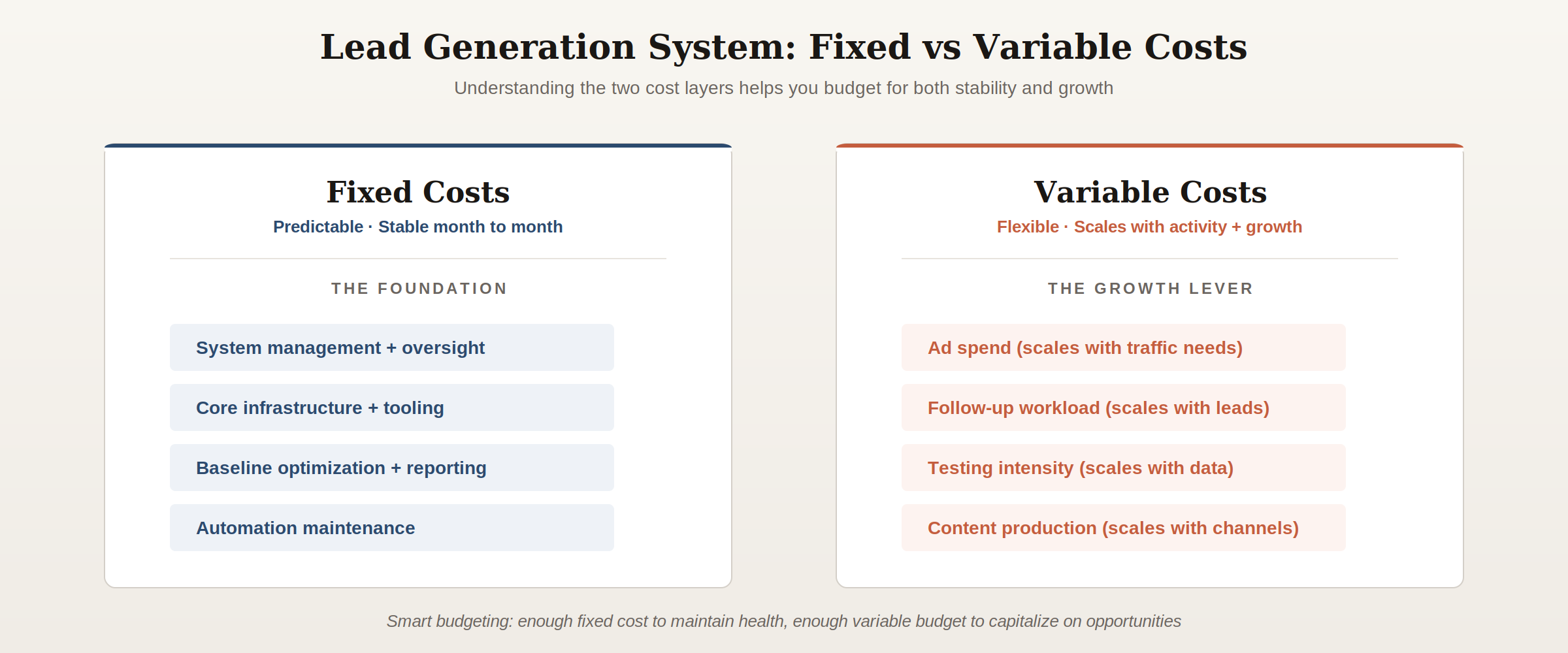
Fixed costs stay relatively stable. System management and oversight. Core infrastructure and tooling. Baseline optimization and reporting. These create the foundation and don’t change dramatically from month to month.
Variable costs flex with activity. Ad spend increases when traffic needs to scale. Follow-up workload increases when lead volume rises. Testing intensity increases when the team is actively refining messaging or offers.
Understanding this distinction matters for budgeting. Fixed costs are predictable and represent the minimum needed to keep the system running. Variable costs are where you invest to grow when the system is performing well and scale back when you need to conserve.
Smart budgeting accounts for both. Enough fixed cost to maintain the system’s health. Enough variable budget to capitalize on opportunities when they appear.
Who Does the Work and Why That Changes Cost
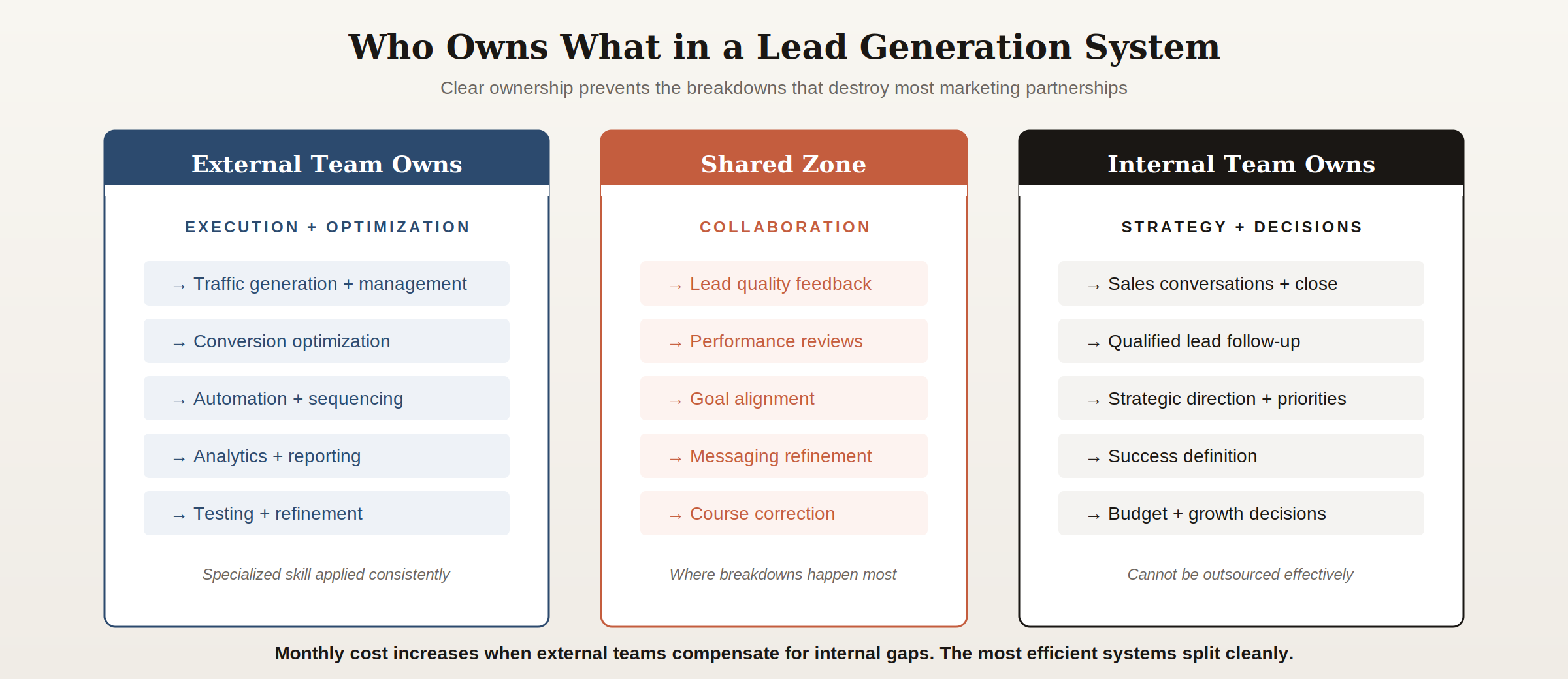
A full system doesn’t mean zero internal effort. Clarity about who does what determines whether the investment produces results or frustration.
Most systems split responsibility along natural lines. External teams manage traffic generation, conversion optimization, automation, and analytics. Internal teams handle sales conversations, follow up on qualified leads, and make strategic decisions. Leadership sets priorities, defines what success looks like, and ensures alignment between marketing activity and business goals.
Breakdowns happen when internal follow-up can’t keep pace with the leads the system generates. When leadership changes priorities frequently enough that the system never stabilizes. When expectations about what the external team owns versus what the internal team owns are unclear.
Monthly costs often increase when external teams are asked to cover internal gaps, including follow-up calls, handling qualifications that sales should own, or making strategic decisions that leadership should direct. The most cost-efficient systems are those in which each side does what it does best.
Why Campaigns Create the Problem That Systems Solve
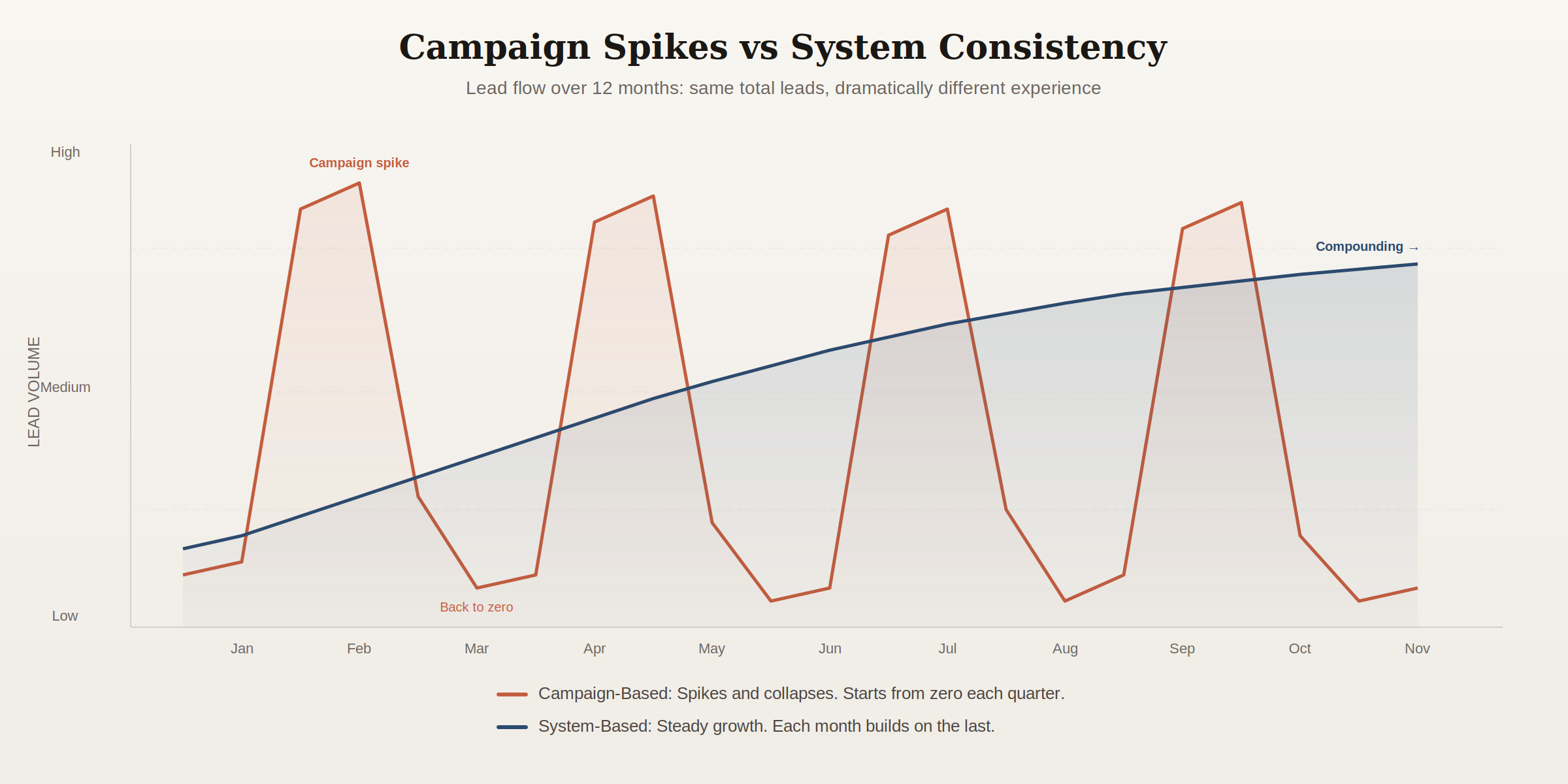
Campaign-based lead generation produces a recognizable pattern. Plan for weeks or months. Execute for a short burst. See a spike in activity. Analyze results. Rest. Repeat.
That pattern creates the feast-or-famine cycle that makes revenue unpredictable. Leads spike during the campaign and disappear when it ends. The team starts from scratch each time because nothing from the previous campaign carries forward.
Systems solve this by keeping every component running continuously. Traffic flows steadily. Follow-up sequences maintain engagement. Optimization improves performance without pausing production. Each month builds on the previous month’s learning.
Time and again, the companies that escape the feast-or-famine cycle are the ones that made the shift from campaigns to systems. The monthly cost feels higher than a single campaign budget. The compounding value over twelve months dramatically exceeds what any series of disconnected campaigns could produce.
Why Bargain Systems Break Fast
Cheap systems cut corners in predictable ways. They rely on one fragile traffic channel because running multiple channels costs more. They skip follow-up because automation requires investment. They avoid optimization because analysis takes time and skill. They provide minimal reporting because accountability requires effort.
Those shortcuts save money initially. They guarantee failure eventually. The single channel stops performing because every channel has cycles. Leads go cold without follow-up. Performance plateaus without optimization. Nobody knows what is working without reporting.
Based on real results, companies that spend three thousand a month for six months on a system that lacks fundamental components would have been better served spending eight thousand a month for three months on a system that actually works. The cheaper option costs eighteen thousand and produces frustration. The more expensive option costs twenty-four thousand and produces a functioning system.
What the First Three Months Actually Look Like
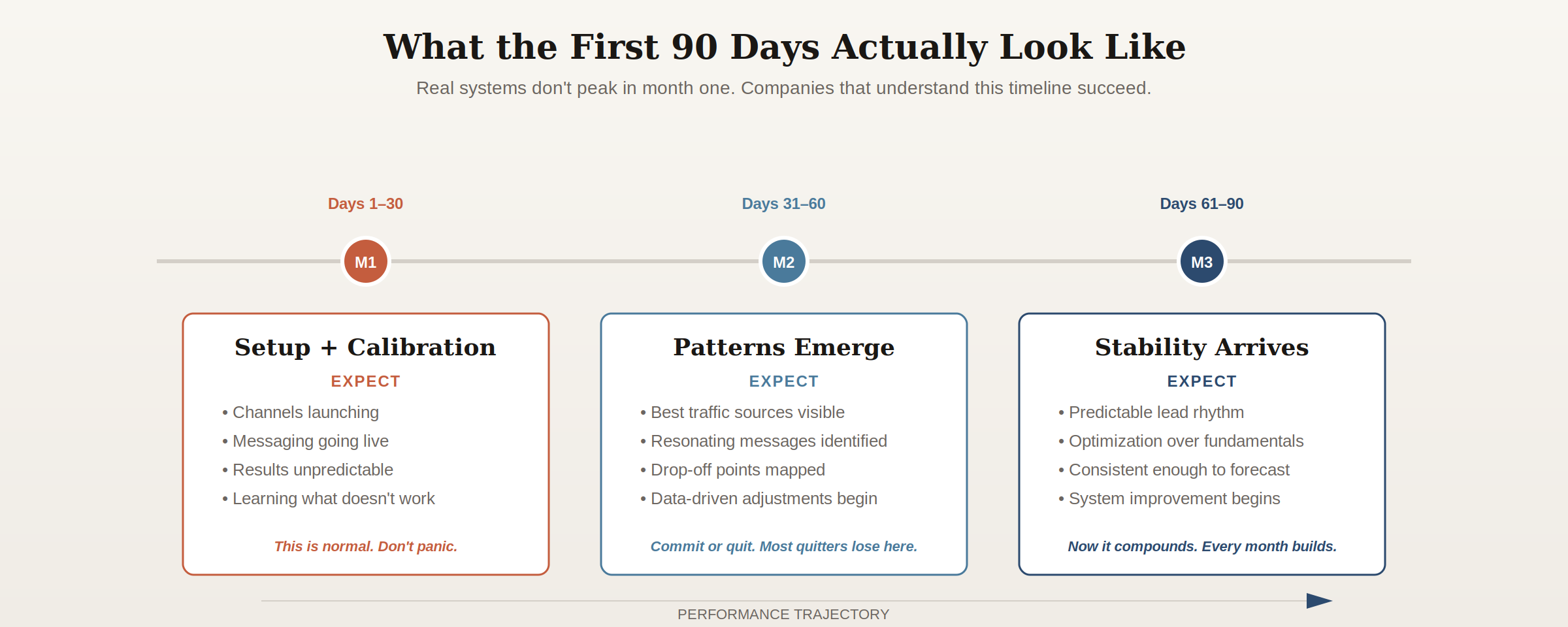
A real system doesn’t peak in month one. Expecting immediate results from a system that hasn’t had time to calibrate is the most common reason companies abandon what would have worked.
Month one is setup and calibration. Channels launch. Messaging goes live. Conversion assets are deployed. Results are unpredictable because everything is new and untested. That is normal.
Month two starts revealing patterns. Which traffic sources produce the best quality? Which messages resonate? Where leads drop off in the follow-up sequence. Adjustments happen based on real data rather than assumptions.
Month three is where stability appears. The system settles into a predictable rhythm. Optimization focuses on refinement rather than fundamentals. Lead flow becomes consistent enough to forecast.
In my experience, the companies that succeed with monthly lead generation systems are the ones that understand this ramp-up timeline and commit to it rather than panicking in month one when results don’t match their expectations.
The Question That Reframes the Entire Cost Conversation
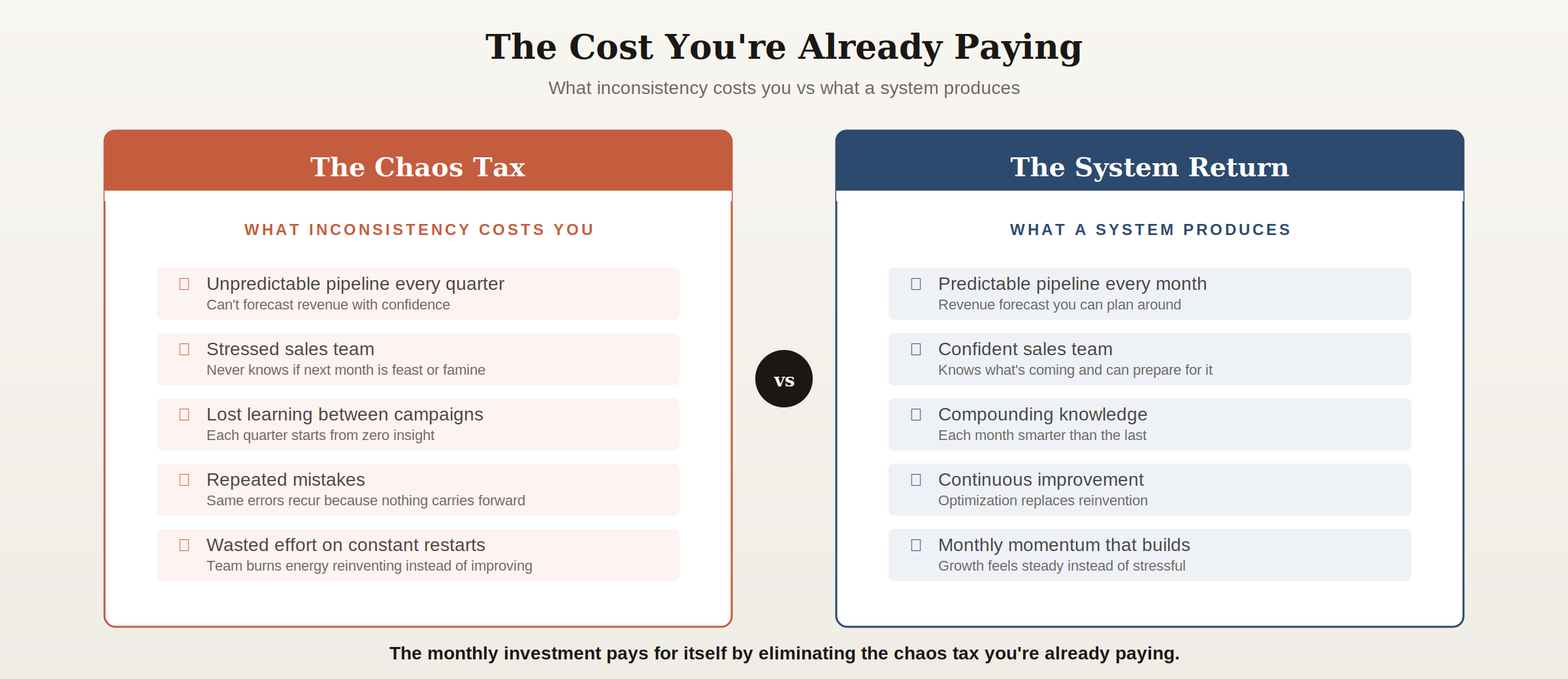
The real question is not what a full lead generation system costs per month. The real question is what inconsistency costs you every month that you don’t have one.
Unpredictable pipeline means unpredictable revenue. Feast-or-famine lead flow means stressed sales teams who never know what next month looks like. Constant campaign launches mean constant rework and lost learning. Starting from scratch each quarter means repeating mistakes instead of building on what works.
A monthly system eliminates those costs. Predictable pipeline. Steady lead flow. Continuous improvement. Compounding knowledge. The monthly investment pays for itself by removing what amounts to a chaos tax that most companies pay without ever calculating it.
The Bottom Line
A full lead-generation system costs between $2,500 and $25,000 per month, depending on complexity, channel mix, and scale requirements. The investment reflects the ongoing work required to keep traffic flowing, optimize conversions, nurture leads, improve quality, and have the entire system treat the cost as an expense. They think of it as infrastructure. The same way they think about their CRM, their sales team, or their office lease. It is the mechanism that produces the pipeline whose revenue they depend on.
What to Do Before You Commit to a Monthly Lead Generation Investment
Before you agree to a monthly fee, compare vendor proposals, or lock into a long-term contract, pause and step back from the numbers.
Ask yourself these questions. Do we want consistent monthly leads or are we comfortable with short-term campaign spikes? Are we clear on whether we need volume, quality, or a specific balance of both, and does our sales capacity match that choice? Do we have the internal sales and follow-up processes to handle steady demand, or will leads go to waste because our team can’t keep up?
If you are debating monthly cost, the real issue is usually not price. There is uncertainty about what kind of system your business actually needs, what problem it is meant to solve, and what internal infrastructure must be in place for the external system to work.
Most companies approach this decision by asking vendors what they charge, picking a number that feels affordable, and hoping it works. That is budget guessing. The right approach reverses the sequence. Define what success looks like first. Map how your buyers actually move from awareness to decision. Understand which channels reach them and at what stage. Calculate the lead volume and quality required to meet your revenue goals. Design the system around those realities. Then the price becomes obvious because you know exactly what you are paying for.
Better approach: before contacting any vendor, document three things. What does a qualified lead look like for your sales team? How many qualified leads per month does your revenue target require? What happens to a lead after it enters your system, step by step, from first contact to closed deal? Those three answers determine what level of system you need, and what that system should cost.
This is why monthly lead generation infrastructure is central to what we call a conversion ecosystem. A complete digital marketing strategy designed to turn traffic into customers predictably and repeatedly. Where every component of the system, traffic, conversion, follow-up, qualification, and optimization, works together continuously rather than in isolated campaigns. Where the monthly investment compounds learning, so the system gets more effective with each passing month. Where lead flow is steady enough to forecast, and the pipeline is predictable enough to plan around. Where the cost of the system is measured against the cost of the inconsistency it replaces.
If you want help determining what level of monthly investment makes sense for your revenue goals and sales capacity, evaluating whether your current lead generation efforts are producing system-level results or campaign-level volatility, or building a conversion ecosystem where every monthly dollar compounds into better targeting, better conversion, and better pipeline quality, reach out. We can help you move from quarterly chaos to monthly consistency and build a lead generation system that earns its investment through predictable, improving results.

