B2B Inbound Marketing vs Outbound Marketing
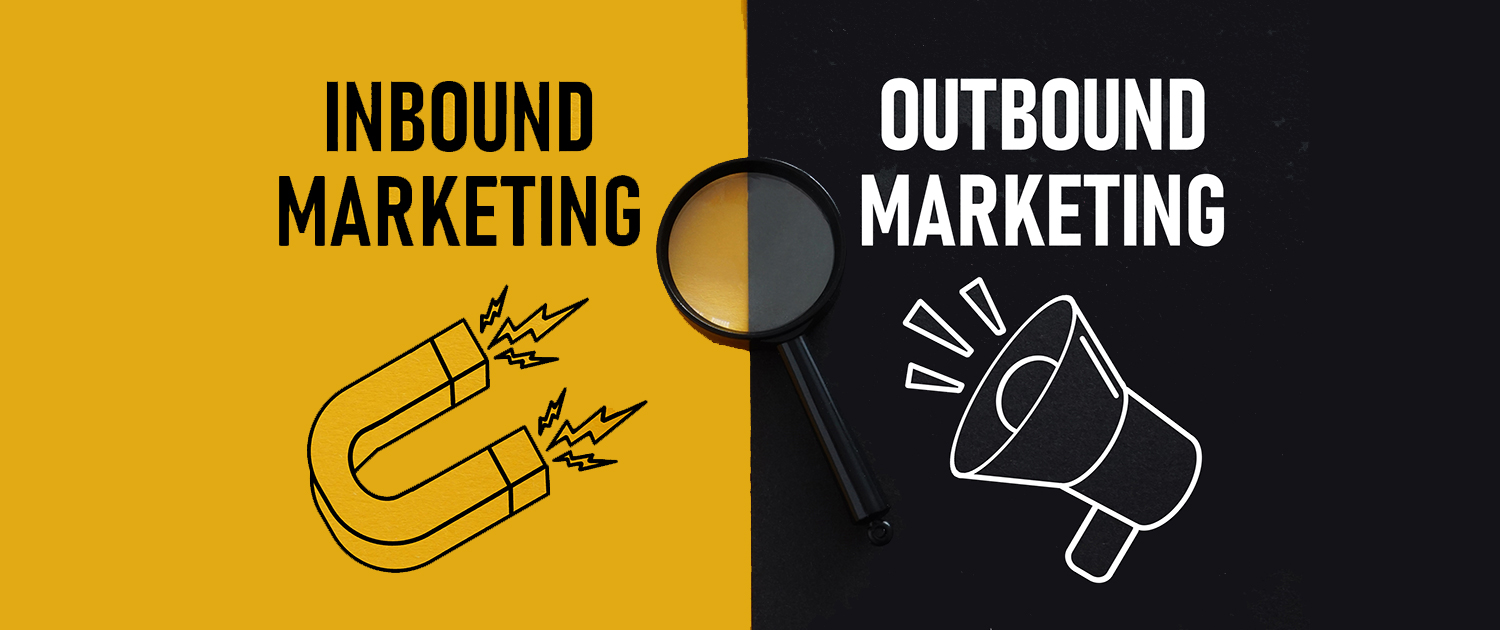
The debate between inbound and outbound marketing never really goes away.
One side argues for inbound: patience built over months, authority established in the market, and trust earned from prospects. The other argues for outbound: immediate speed, control maintained throughout the process, and consistent volume delivered. These represent distinct strengths and trade-offs, based on what I’ve seen.
Most B2B companies get stuck because they frame this as a quick, tactical choice.
It is not that simple to decide.
Inbound and outbound are not just competing channels but approaches that address buyer uncertainty and risk in different ways. Inbound reduces uncertainty through self-education and content; outbound does so through structured outreach. Each addresses different buyer needs and challenges.
Before diving deeper, let’s clarify how each approach operates day to day, how it fits into your operations, and how it can be selected (individually or together) to drive sustainable B2B growth. With this foundation, we can better compare their respective strengths.
What Inbound Marketing Is Designed to Do for Growth
Inbound marketing assumes buyers want to self-educate before engaging sales directly.
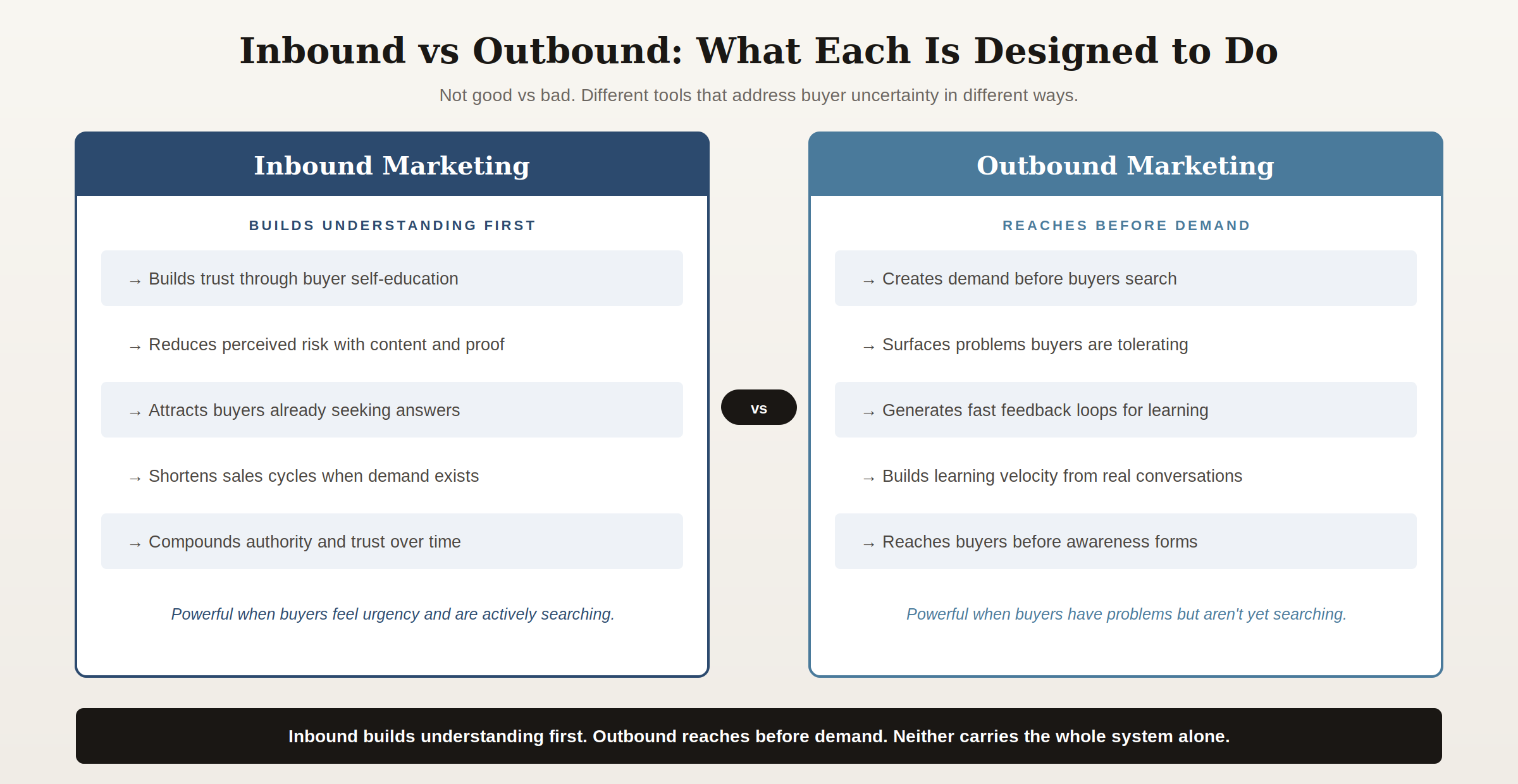
Inbound focuses on content (for those evaluating), SEO (to increase visibility), and thought leadership (to build authority) to earn trust and reduce uncertainty before conversation. Outbound provides direct outreach to introduce the solution. Thus, inbound builds understanding first; outbound reaches before demand.
Inbound isn’t just about generating traffic for a website, it is about creating a system to increase belief and trust in order to drive sales.
Strong inbound systems drive outcomes:
- They shape buyer understanding before sales engagement
- They reduce perceived risk by providing clarity with content
- They attract buyers who are already motivated to solve a business problem
- They shorten sales cycles once market demand is present
Inbound is powerful when buyers already feel urgency about the problem and are actively seeking answers to the problems they experience.
Where Inbound Breaks Down
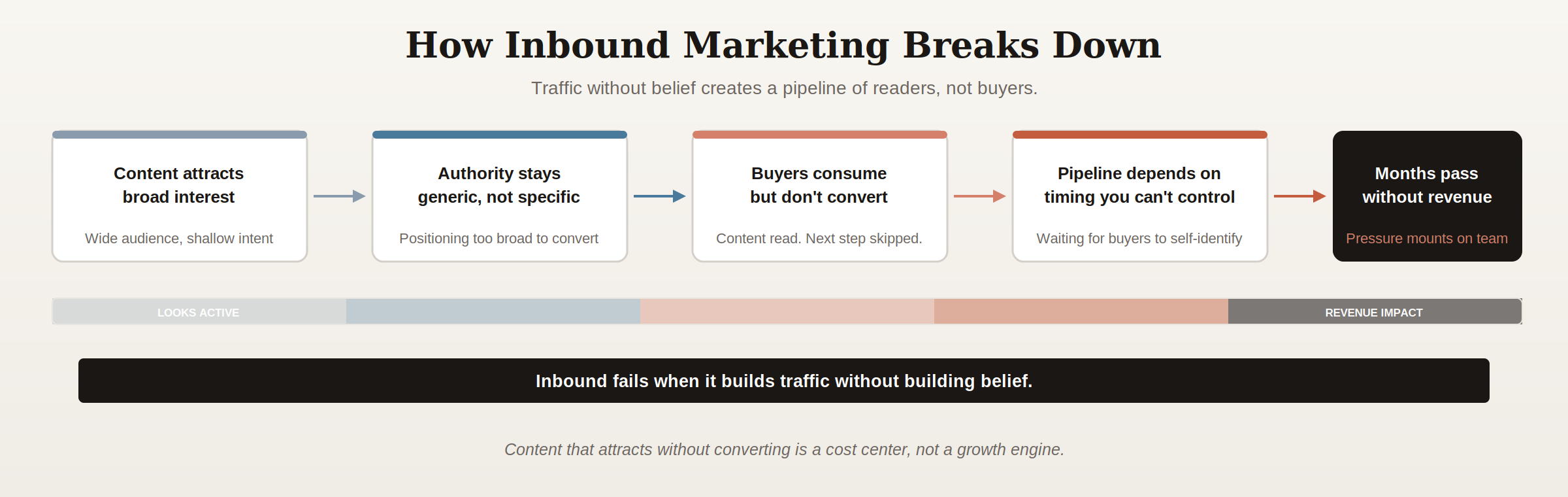
Inbound fails when treated as a lead-generation engine rather than a trust-building system.
The most common failure points are when content attracts interest but never moves them to the stage where they intend to purchase. And this can happen in many ways. But overall, if a company’s authority is broad, it can weaken its positioning. They want to know that their service provider has worked with these types of problems in the past. This then has potential buyers consume content and then leave, failing to take the next step in the buying cycle.
Inbound also breaks down when buyers are not ready to self-identify during the process, or when the market is saturated with similar content available to the audience.
Timing is meeting a buyer when they are ready to make a decision, and that is also a struggle. It can take months or years to compound results. For companies needing near-term growth, that delay creates pressure on teams working daily.
What Outbound Marketing Is Designed to Do
Outbound marketing operates entirely on different assumptions.
Buyers are not actively searching currently, but they still have problems worth solving today.
Outbound creates an interruption. It introduces relevance before buyers ask for it directly. Cold emails, outbound calls, LinkedIn outreach, and paid prospecting exist to surface problems buyers may be tolerating rather than prioritizing for action.
Outbound isn’t just a set of tactics that look and feel pushy. When designed properly, a powerful outbound framework should spark the buyer’s curiosity.
And because outbound marketing reaches buyers, it touches on internal emotions and pain points before they recognize their need for the product.
Strong outbound systems drive outcomes by creating demand instead of waiting for it.
Where Outbound Breaks Down
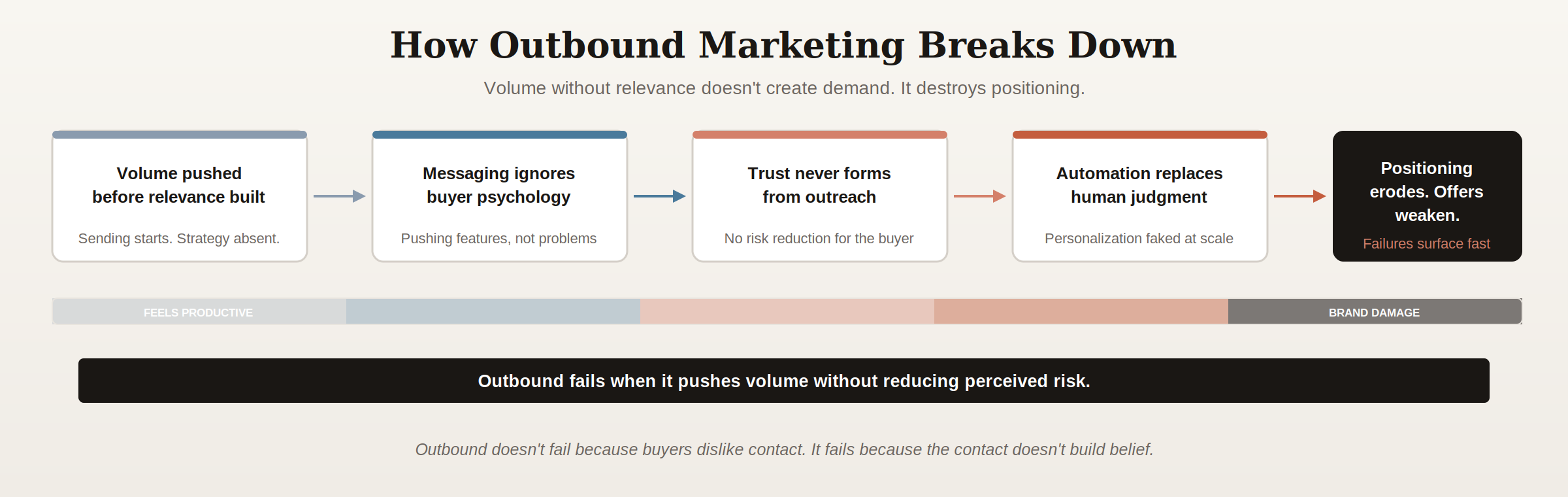
Outbound fails when it ignores buyer psychology.
- Messaging pushes before relevance develops
- Volume overwhelms the trust-building needed for decisions
- Outreach disconnects from real buyer problems
Automation replaces strategic human judgment.
Outbound increases the risks of strategic misalignment. This leads to positioning losing clarity, offers weakening as buyers hesitate, and failures becoming apparent quickly.
Outbound does not fail because buyers dislike contact, excessive emails, or ignored calls. It fails because most outbound does not reduce the perceived risk or create belief in the promised outcome.
Early Stage Needs vs Late Stage Needs in Growth Operations
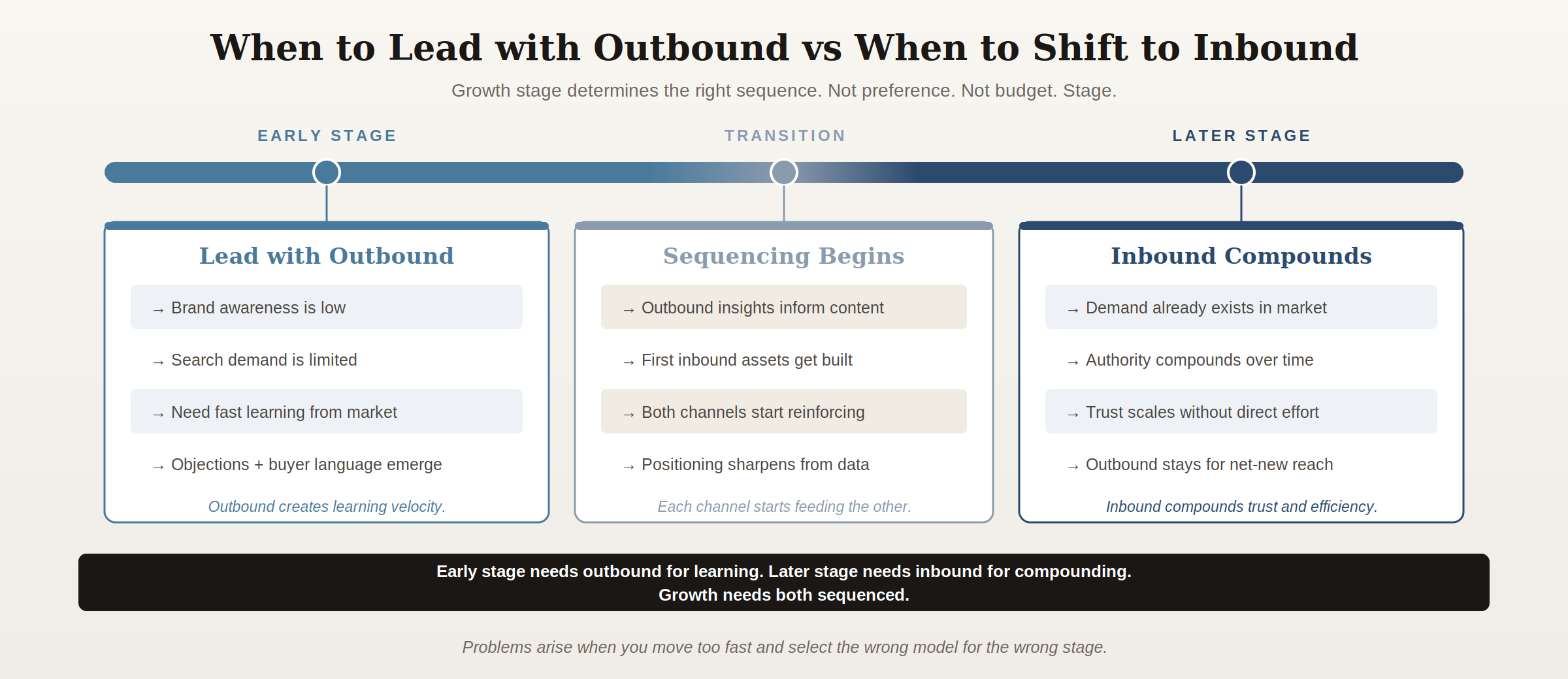
Inbound and outbound behave differently at each growth stage.
Early-stage companies need outbound marketing. Not because founders prefer calls, inbound costs too much, or content takes too long to produce. They need it because brand awareness is low, search demand for the solution is limited, and they need quick feedback loops for learning.
Outbound creates learning velocity. Objections surface from prospects contacted. Buyer language emerges in conversations. Positioning gaps become clear through real conversations.
Later-stage companies benefit from inbound marketing. This isn’t because of the failure points of outbound marketing, the reality that salespeople want leads, or the fact that cold calling gets harder. Demand already exists in the market. Authority compounds over time. Trust scales without direct effort.
When scaling, problems arise when you move too fast and select the wrong model.
Decision Speed Is the Real KPI
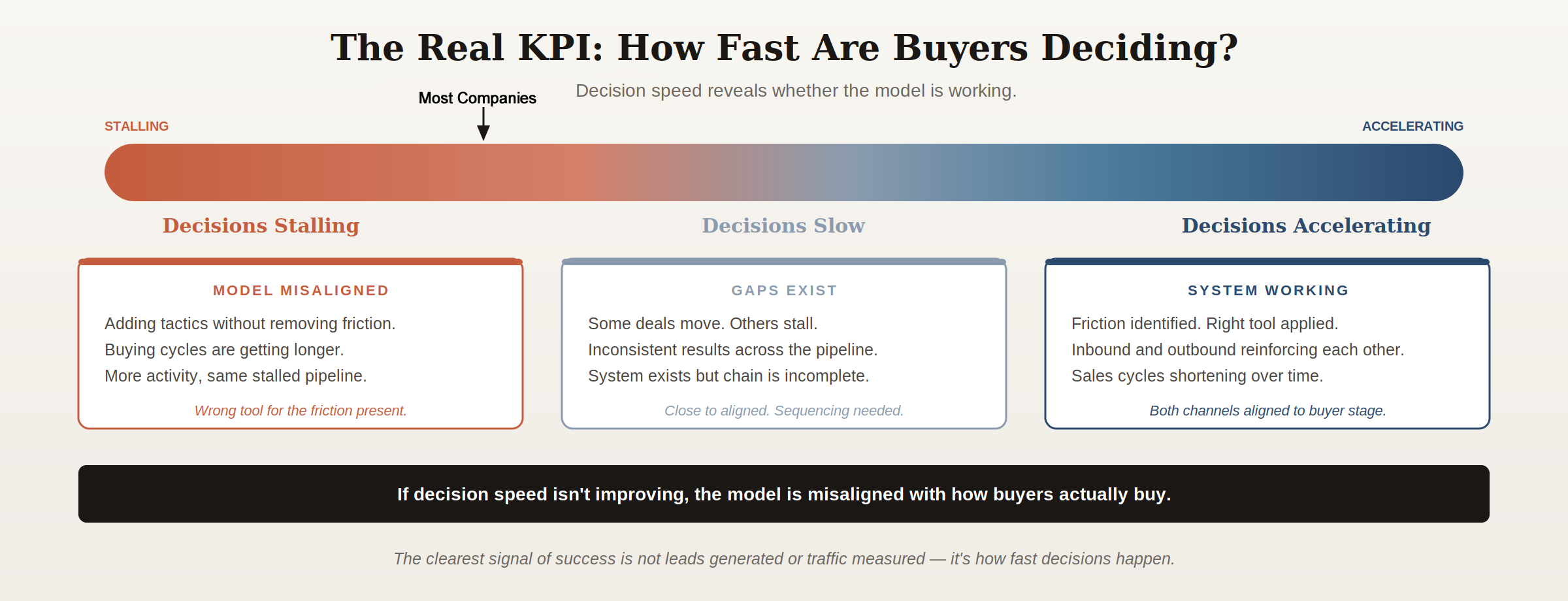
The clearest signal of success is not the number of leads generated or traffic measured in the systems, but the speed at which decisions are made.
The speed at which buyers make decisions becomes the real signal. Inbound should shorten decisions once buyers arrive on site. Outbound should accelerate awareness before buyers stall in the process.
If decision speed is not improving, this suggests the model is misaligned with the marketing teams’ approach. The misalignment shows in the lengthening of the buying cycles.
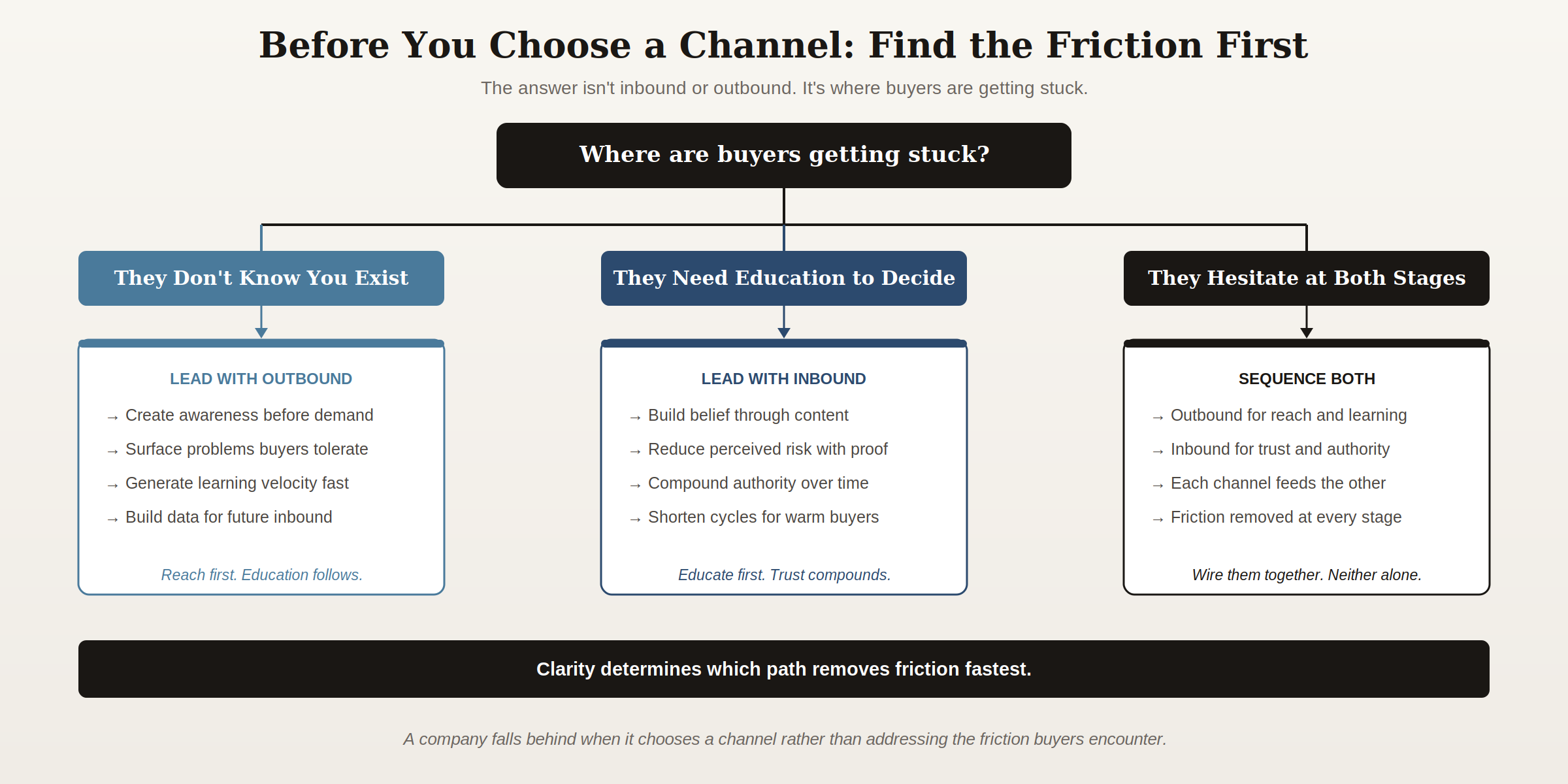
The Real Question to Ask
The question is not which system is better, inbound or outbound.
The question becomes:
- Where are buyers getting stuck in the journey?
Once you answer that, then move to:
- What removes that friction fastest?
Inbound and outbound are just tools available to sellers. Clarity is the strategy that leadership needs to make decisions. When teams choose tools without understanding the friction buyers encounter, they are making a fatal mistake.
When friction persists in the buyer journey, teams usually add more tactics without removing the obstacles. Fix the buyer journey by clarifying the obstacles, and you will know which method is needed to solve the problem.
How High-Growth Companies Use Both
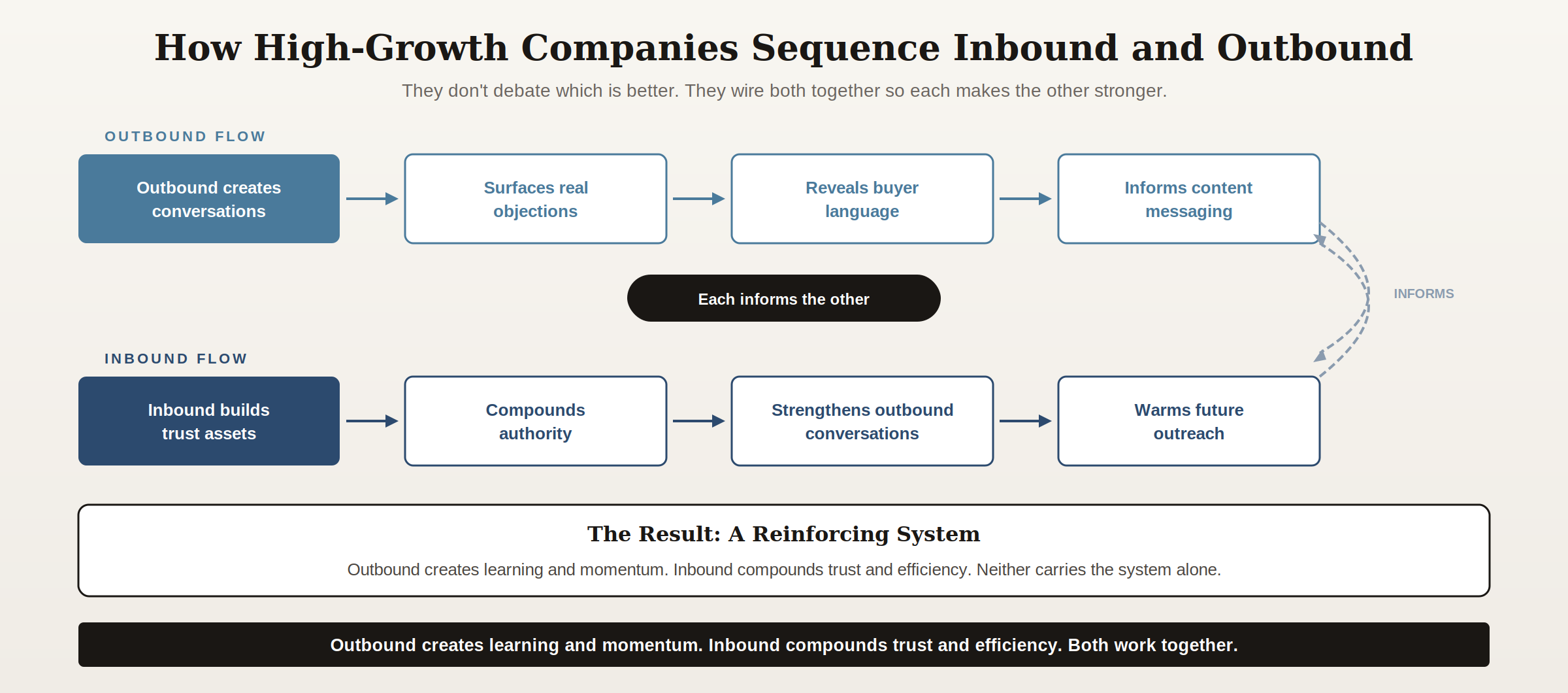
Strong B2B companies do not let operations teams argue the inbound vs. outbound debate. Instead, they sequence both of them together.
Outbound creates learning and momentum. Inbound compounds trust and efficiency.
Outbound informs which inbound messaging to use to create content. Inbound strengthens outbound conversations. Each has a specific purpose.
Neither carries the whole system alone. Both work together. It is the sequencing of both methods that creates the results that businesses need to eventually increase growth.
What to Do When You Are Unsure Which Path to Scale
Before doubling down on content or increasing outbound volume sent to prospects, pause and step back from applying new tactics.
Ask yourself clearly:
- Where are buyers hesitating before they engage with us, and what is going through their minds right now?
- Are we waiting for demand that does not yet exist in the market, or are we creating belief in the buyers’ minds?
- Which uncertainty must be removed first to move a buyer’s decisions forward?
Inbound and outbound are not opposing strategies fighting for resources.
But a company will fall behind when it chooses a channel rather than addressing the friction a customer may encounter at each stage of the buyer’s journey.
Before investing more time or budget in campaigns, clarify whether your market needs education in content, interruption in outreach, or sequencing between the two approaches.
Clarity determines which path removes friction fastest.
If you want help diagnosing where buyers are getting stuck in the process and aligning inbound and outbound efforts so they work together rather than compete for resources, reach out to us directly. We can help you choose the path that reduces hesitation present and accelerates decisions made instead of amplifying noise created in the market.