Is AI Lead Generation Worth It for B2B Companies?

Before evaluating AI lead generation, a business needs to clarify whether it addresses an actual pipeline challenge or is just a tempting shortcut. The central argument still stands: AI is only valuable when it aligns with your business needs, and you have the right expectations. A business must realize that AI is never an automatic solution.
Outbound is much tougher now; without the right systems, inbound results fall short of expectations, and sales teams are stretched more than ever. And when a business sees a demo, case study, or bold claim about AI sending thousands of emails or effortlessly scraping lead lists, they get excited, thinking that this will solve everything.
But the real question is:
Is AI-led lead generation actually worth it for B2B companies, or is it just another shiny shortcut being promised?
Many leadership teams approach this as a tooling decision with the wrong mindset, selecting software or platforms with the expectation that AI technology alone will resolve fundamental business issues.
The truth is that it’s not simple. It never is.
AI-led lead generation depends on the business problem it aims to solve, not just the technology.
This article clarifies where AI-driven B2B lead generation aligns with business objectives, helping leadership teams evaluate effectiveness and risks for their organizations.
What AI Lead Generation Is Designed to Do
AI lead generation exists to remove manual bottlenecks in the marketing and sales process. This challenge is an ongoing problem, and it will always be.
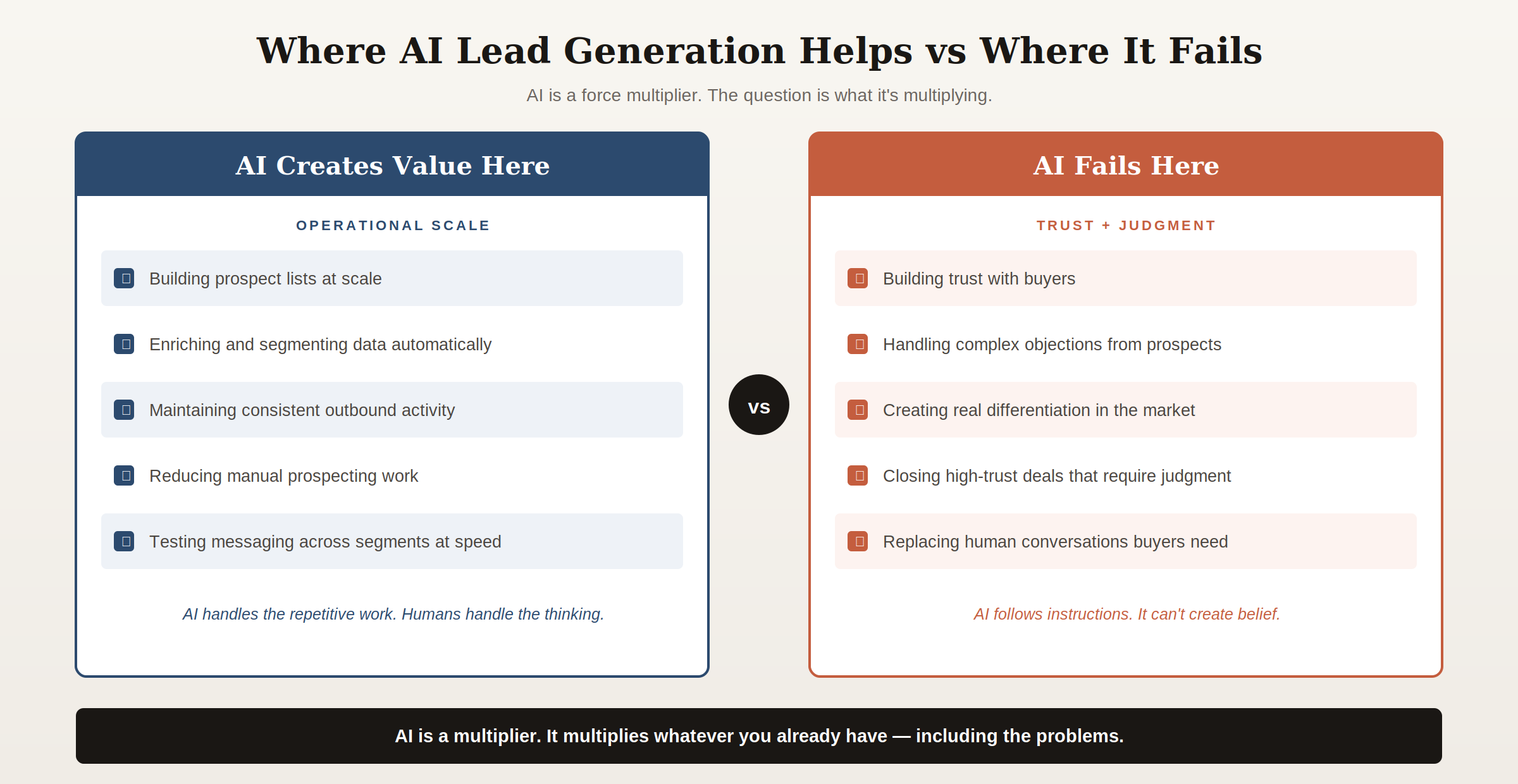
The premise is that technology should automate tasks that humans are slow, inconsistent, or expensive to perform repeatedly. At its core, AI lead gen is about scale and speed. AI lead-generation systems can build large prospect lists quickly, without the regular delays teams experience. The systems enrich data across sources, AI segments audiences automatically, and the technology executes outreach without the fatigue a person would have.
AI excels at preparing for and executing marketing operations. The technology does not excel at the judgment required for human decisions. In reality, AI lacks the nuance required to have conversations with buyers. And though it follows instructions, the technology can’t, at this moment. create the belief in buyers needed to make the sale.
Where AI Lead Generation Creates Immediate Value
AI delivers clear value in specific operational areas.
The technology is effective at identifying potential buyers faster; AI can keep pipelines consistently full; and the system reduces the manual prospecting work sales reps do daily. Best of all, AI maintains the consistent outbound activity required to increase sales.
For teams with limited time, staffing limited by budgets, or data hygiene needed in systems, AI often feels like a relief to operations. Instead of reps spending hours researching prospects, copying information, and pasting data manually, the system handles the repetitive work automatically.
Overall, the main takeaway is that AI enables sales teams to shift energy from repetitive tasks to high-value customer conversations, thereby maximizing team impact.
Where AI Lead Generation Fails
AI fails when it is expected to instill trust with buyers.
Common failure patterns include:
- Conversations start colder than expected
- Increased unsubscribes and greater resistance
- Sales teams that are overwhelmed by low-intent replies
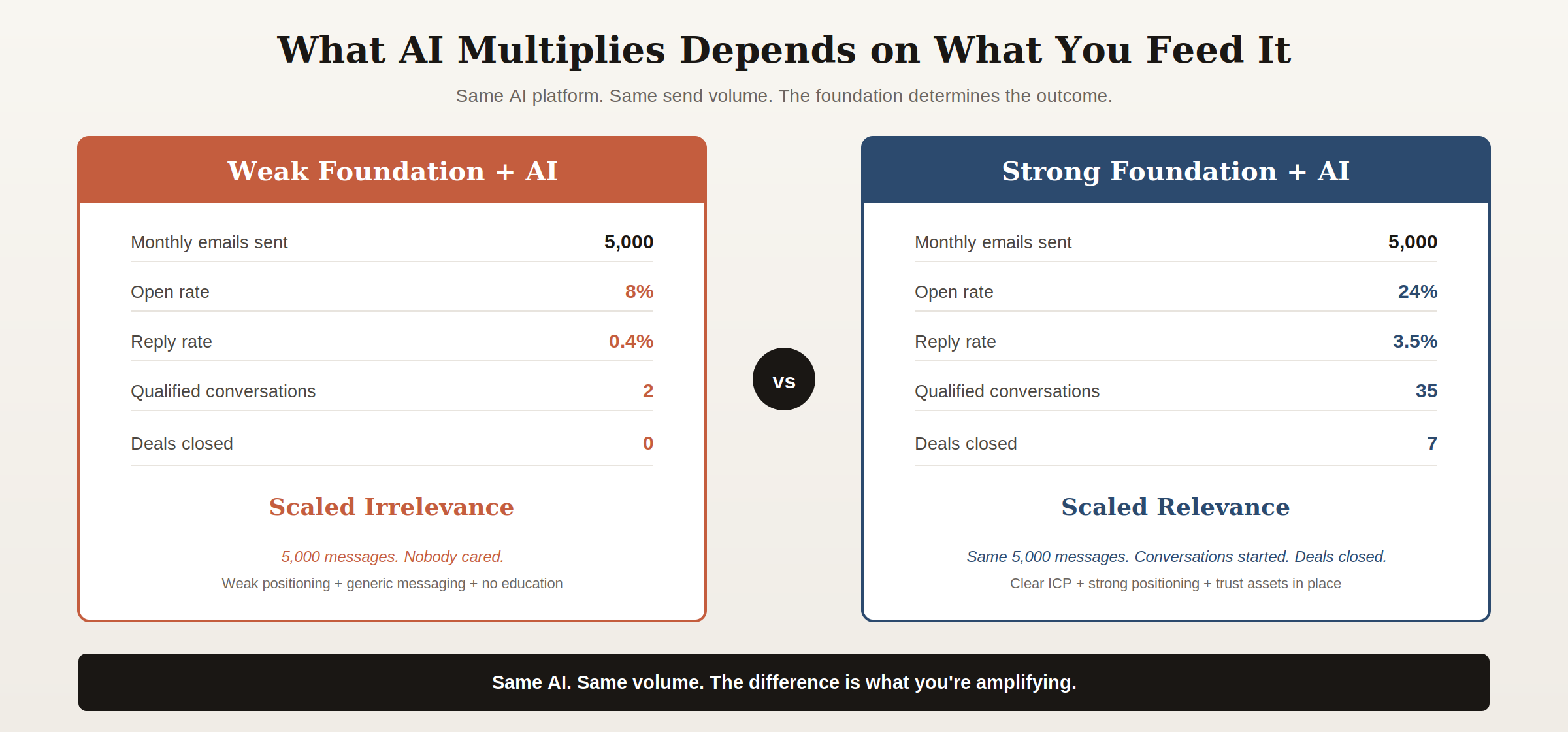
Companies must understand that AI amplifies whatever strategy already exists. If market positioning is weak, AI spreads confusion among the audience faster. If messaging is generic and used by teams, AI scales the irrelevance to prospects across the board.
The problem is not AI technology. The problem is what AI is being asked to amplify.
The Real Question Is Not Does It Work, but Work for What
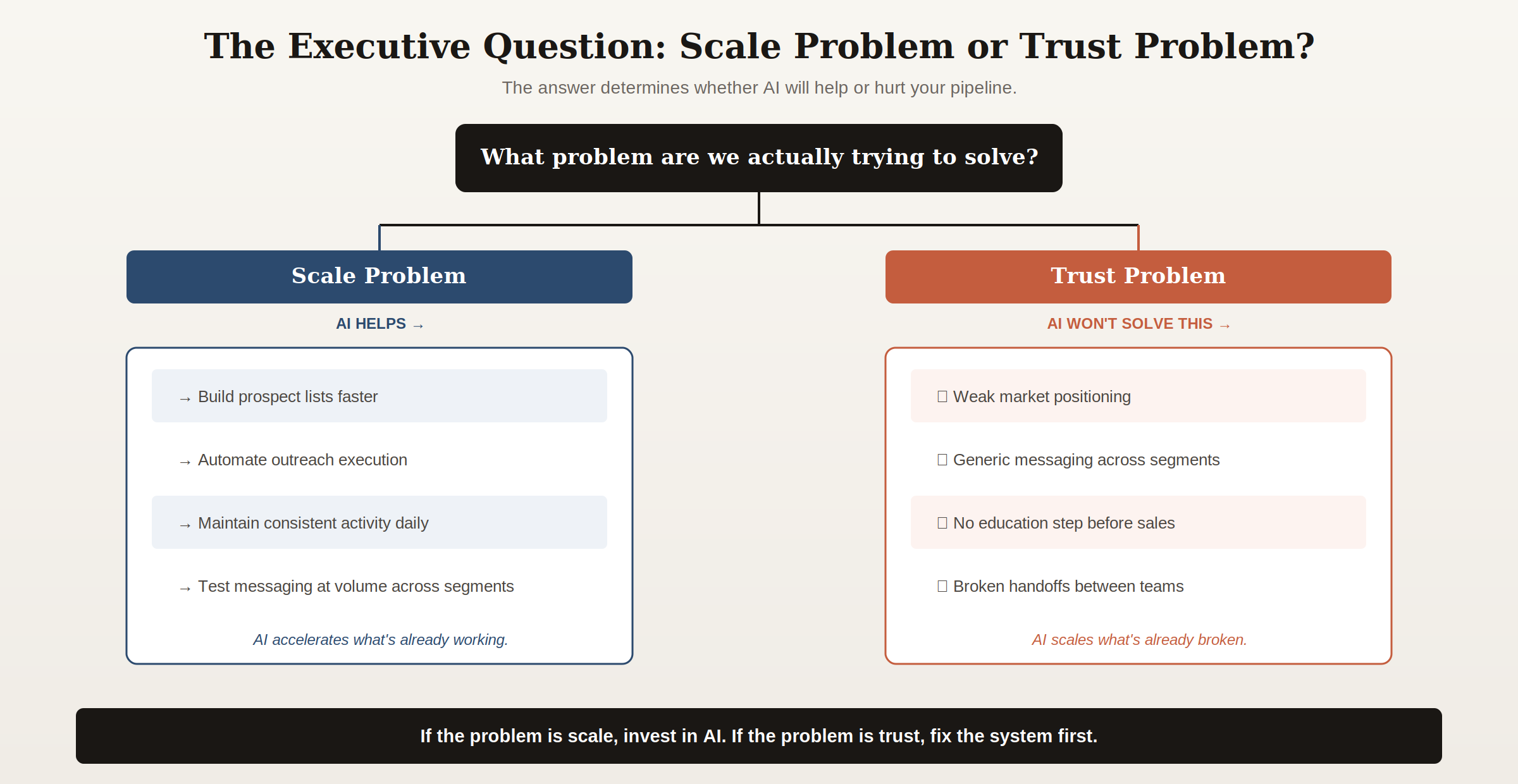
The beauty of AI for lead generation is that it helps create volume. The technology excels at testing messaging for prospects, expanding market reach, and supporting outbound marketing.
But AI still performs poorly at building beliefs with buyers. The technology struggles to handle complex objections raised by prospects, cannot create differentiation, and fails to close high-trust deals.
So, leaders should view AI as a tool to drive volume, not a solution for complex pipeline or buyer trust problems. Setting realistic expectations will minimize organizational disappointment.
When AI Outreach Breaks
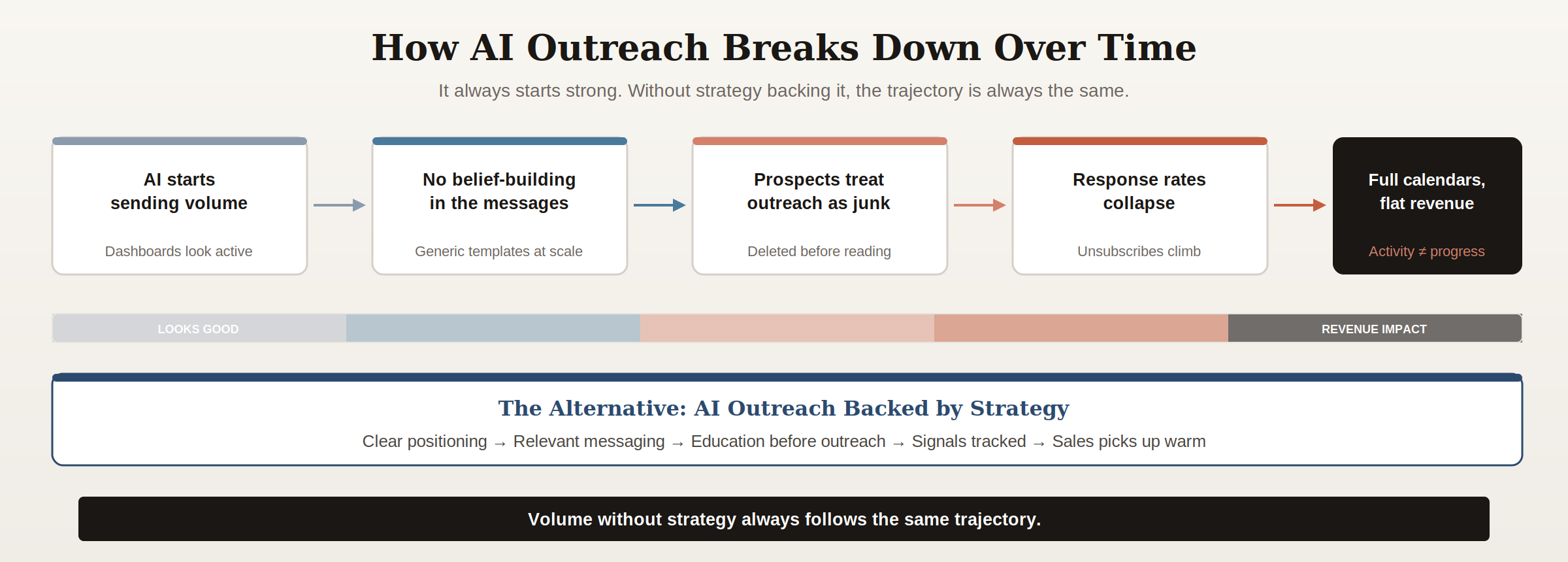
Without belief in your messaging, prospects treat your outreach like junk mail. And even though send volume climbs, responses will stay flat. This results in buyers deleting messages before even reading the subject line.
AI technology will always start strong, but without a strategy, performance will drop, resulting in:
- Dashboards are filling with metrics nobody uses
- Emails are going out to hundreds of prospects with little results
- Calendars are packed with calls leading nowhere
- Conversations with leads that end within minutes
- Leads asking about pricing before understanding value
- Sales teams are complaining about the quality of leads
- CRM activity is building up without closed deals
- Teams are celebrating volume while revenue stays flat
- Full calendars create the illusion of progress
Understanding failure points also sheds light on where AI personalization is commonly misused.
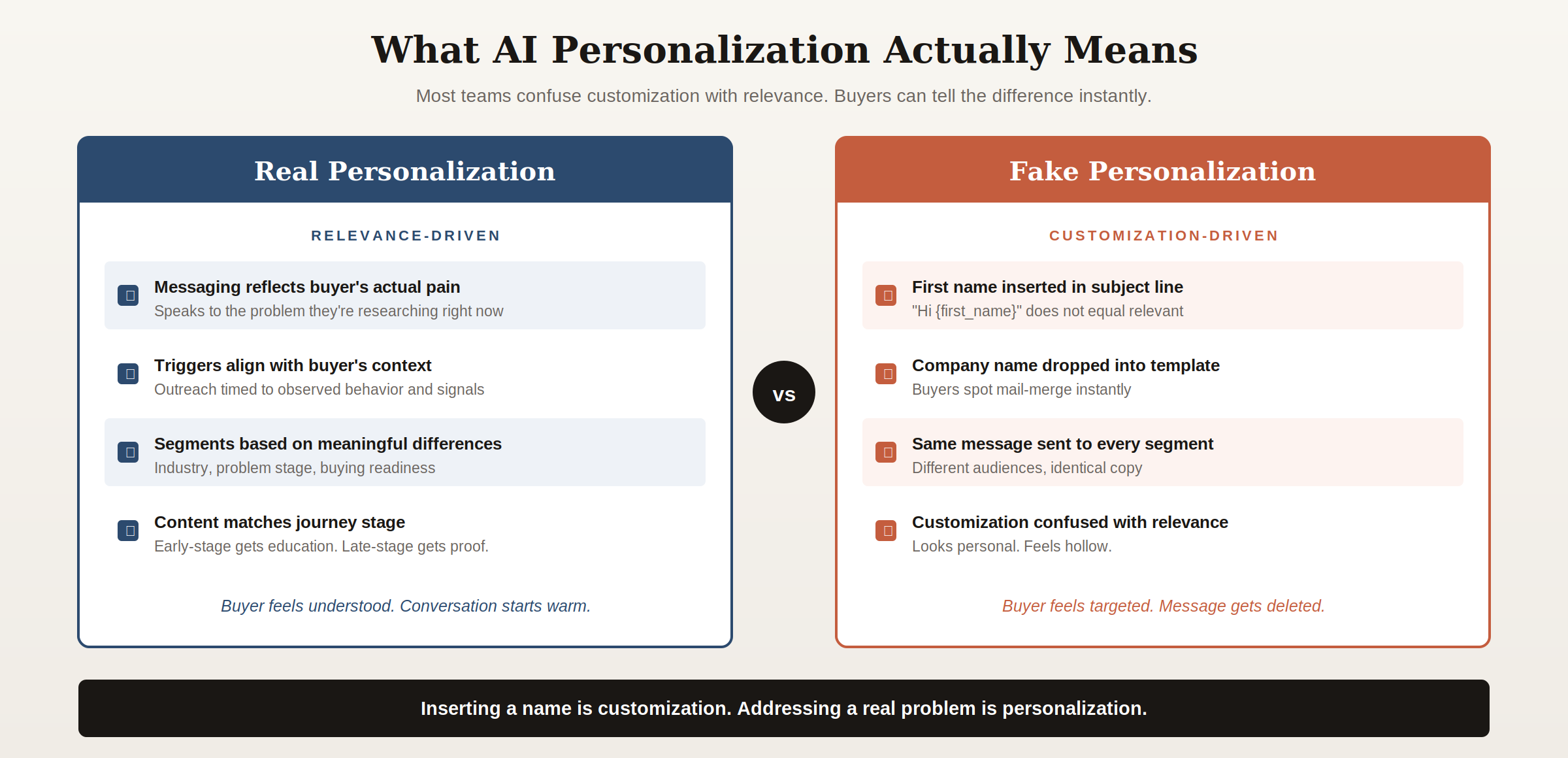
Many teams think AI personalization means just inserting a first or company name in messages.
That is not personalization. This approach feels shallow, and teams keep confusing customization with relevance.
What personalization really means is relevance. AI can personalize at scale only when segments are truly meaningful to the business. You can do this by using AI to create messaging that reflects the real pain buyers experience and using triggers that align with each unique buyer’s context.
The takeaway: Technology that only adds names, without addressing real buyer problems, misses the mark, resulting in disconnected outreach.
The Risk Leaders Underestimate
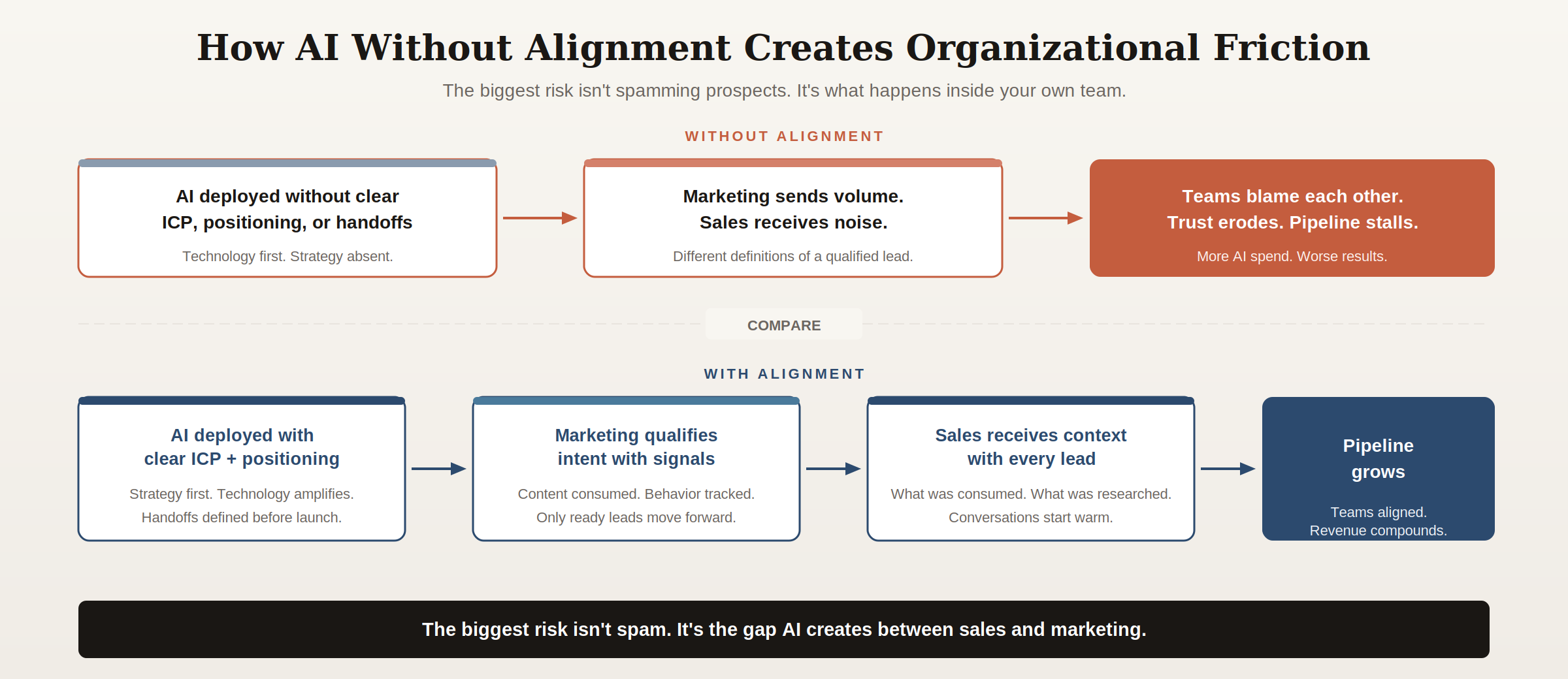
The biggest risk with AI lead generation is not spamming prospects, it’s creating misalignment between sales and marketing.
When AI is introduced without clear ICP definitions, strong market positioning, or coordinated handoffs, companies face increasing misalignment between sales and marketing teams. This leads to organizational friction and eroded trust.
The Executive Question That Matters
The real question is not whether AI lead generation is worth it.
The question becomes: What problem are we trying to solve with it in business right now? If the problem is the scale, AI helps teams run operations. If the problem is a lack of trust in buyers’ minds, AI will not solve it.
If teams invest in technology without understanding the real problem that needs to be solved, confusion will grow and resources will drain without results.
The Cost of Avoiding
When companies avoid looking at AI Lead Generation for their company, they are really avoiding how AI can multiply their sales. But before deciding to use AI, you need to address any internal issues currently holding back operations, sales, and marketing. If you fail to fix these issues, you will only make them more visible, which will hurt sales, erode trust, and destroy any credibility you have built.
So the real cost of avoiding AI points back to the lost sales already occurring because of a sub-optimal sales funnel.
The Bottom Line on This
AI-led lead generation is absolutely worth it for B2B companies operating in today’s market. But if you want it to do what it is designed to do, you need to audit your internal process and fix these issues first.
Without taking an honest assessment of your current system, you will never know how profitable AI lead generation can be. Remember that AI is designed to multiply, so will you multiply the internal issues in your business, or will you multiply reach and the number of opportunities that will grow your business?
What to Do Before You Decide Whether AI Lead Generation Is Worth It
Before buying another AI tool or writing it off entirely, pause and step back from the hype cycle.
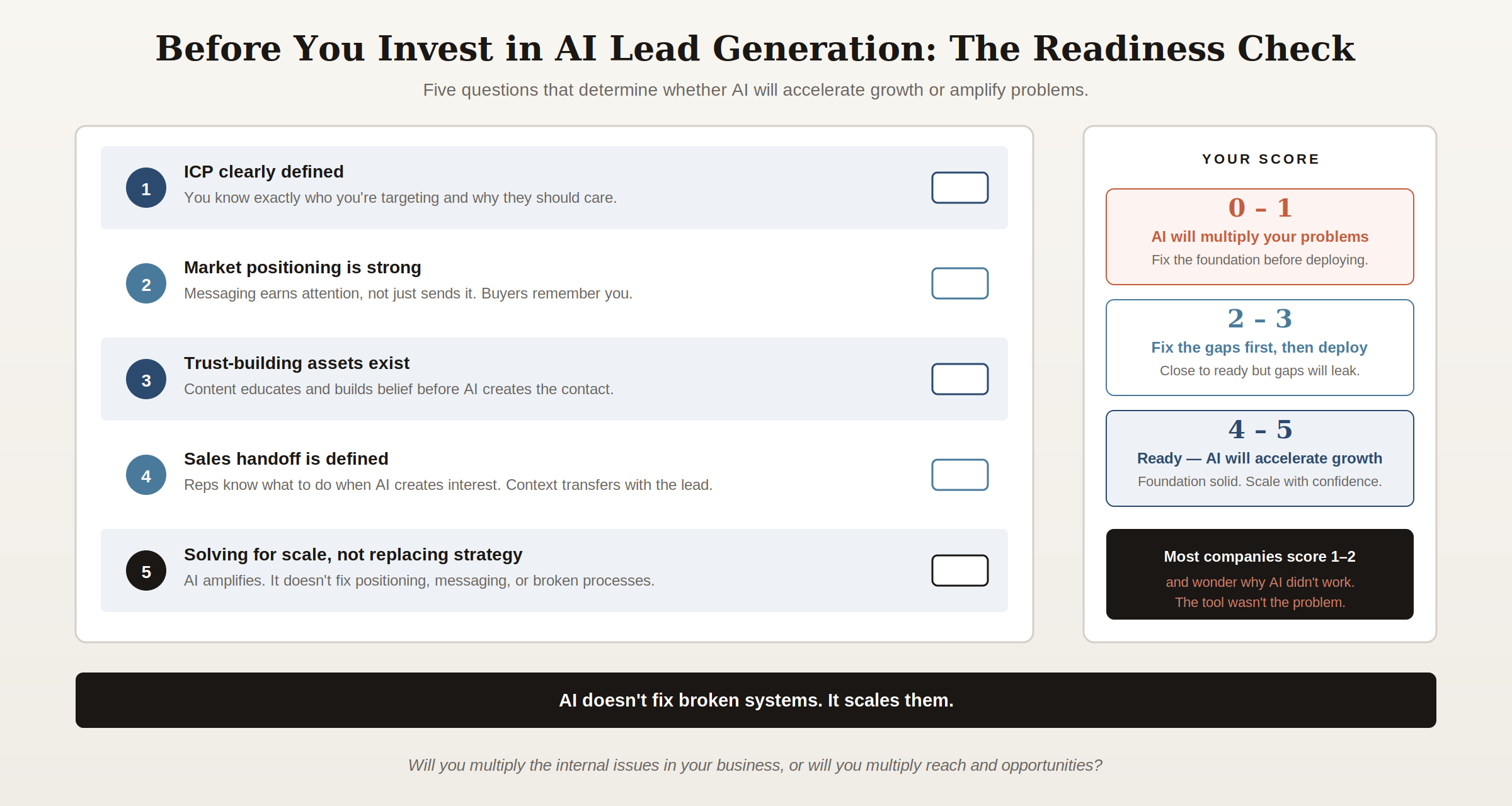
Ask yourself these questions:
- Are we trying to solve a scale problem or a trust problem?
- Do we know exactly who we are targeting and why they should care about the solution?
- Are sales prepared to take over once interest is created by AI, or are we expecting AI to carry the conversation forward?
Remember, AI lead generation is not a shortcut to belief formation with prospects.
Growth will slow when AI is expected to fix unclear positioning or replace human judgment that is needed in operations.
Before investing more time or budget in technology, clarify the role AI should play in your system design, craft messaging that earns prospects’ attention, and define clear handoffs to sales teams.
If you want help evaluating whether AI-led generation fits your business model now, designing a system where AI creates opportunities and humans build buyer confidence, and avoiding the common pitfalls that kill the trust built, reach out to us directly. We can help you leverage AI rather than let it be noise in the market.