Best Lead Generation Systems for B2B Companies

After months of trial and error, teams still ask for the best lead generation system. If this question is on your mind, it points to a deeper issue.
Unless you have a system in place, lead generation will always be unpredictable. Is one month great, yet the next, silent? And if you don’t have a system in place, the only solution you can think of is to buy new tools and try new tactics, but you can’t forecast outcomes.
So the question surfaces clearly:
What are the best lead generation systems for B2B companies, and why do so many setups fail to produce steady results?
Most businesses look for a tactic to implement.
This is the common mistake.
Lead generation fails because companies take on activities rather than adopt systems designed for growth.
Before diving into the key components, you need to shift your perspective. In the next sections, this article explains what qualifies as a working lead-generation system, outlines the components high-performing B2B companies use for growth, and discusses how to assess if your setup enables predictable growth or requires constant reinvention.
Why Best Lead Generation Is the Wrong Starting Point
Most teams ask which channel works best when struggling with lead generation.
Should we focus on cold email? Invest in SEO? Double down on paid ads? Post more on social media? Build partnerships?
But after answering this question for many businesses, I realized that this is what businesses don’t understand.
Channels deliver your message, but don’t guarantee leads. Channels don’t guarantee automatic lead generation.
There needs to be a shift in mindset. Businesses need to think of channels as tools rather than strategies. Tools alone don’t create a pipeline of consistent leads.
What generates leads is the system behind the channel. When developing this system you need to define:
- Who am I targeting?
- What message do they receive?
- How do you educate them?
- When does sales get involved?
- How do you measure success?
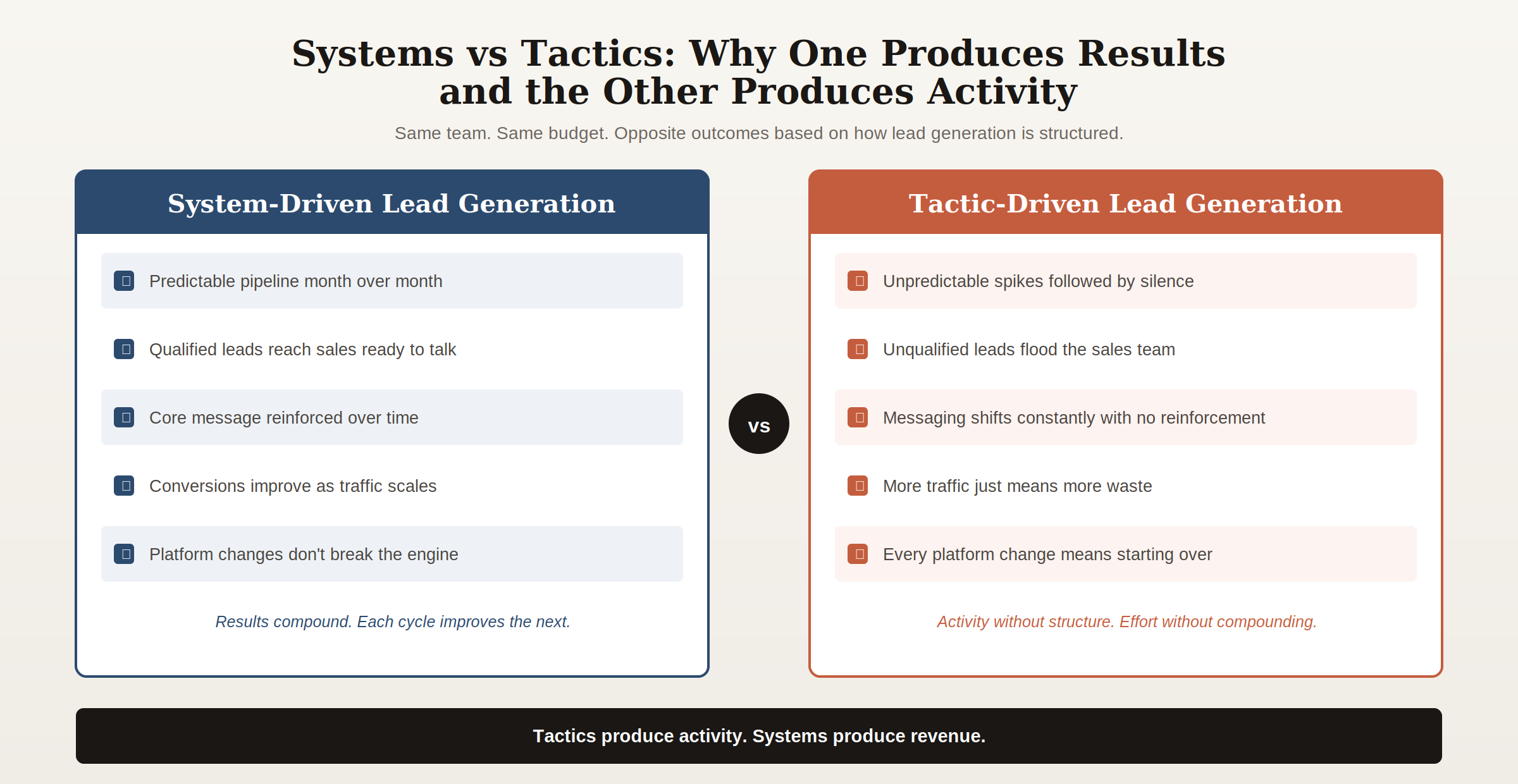
A channel without a system produces randomness. This happens all the time. A company runs a campaign, gets some results, and then watches them disappear. With a system in place, a company can produce a consistent flow of leads. And building a system correctly works regardless of which channel you use, because of the underlying logic that underpins it.
Teams waste months chasing the best channel when the real issue is that they have created individual activities around a channel rather than systems that complement each other. They’re executing tactics without understanding why those tactics should work in the first place.
The Non-Negotiable Components of High-Performing B2B Lead-Generation Systems
Clear Ideal Customer Definition
The best lead generation systems start with deliberate exclusion. Not inclusion. Exclusion.
Teams define the system by whom it is meant to serve and who it is not meant to serve. This clarity ensures that relevant messaging and education are delivered, laying the foundation for later steps such as qualification and the sales handoff.
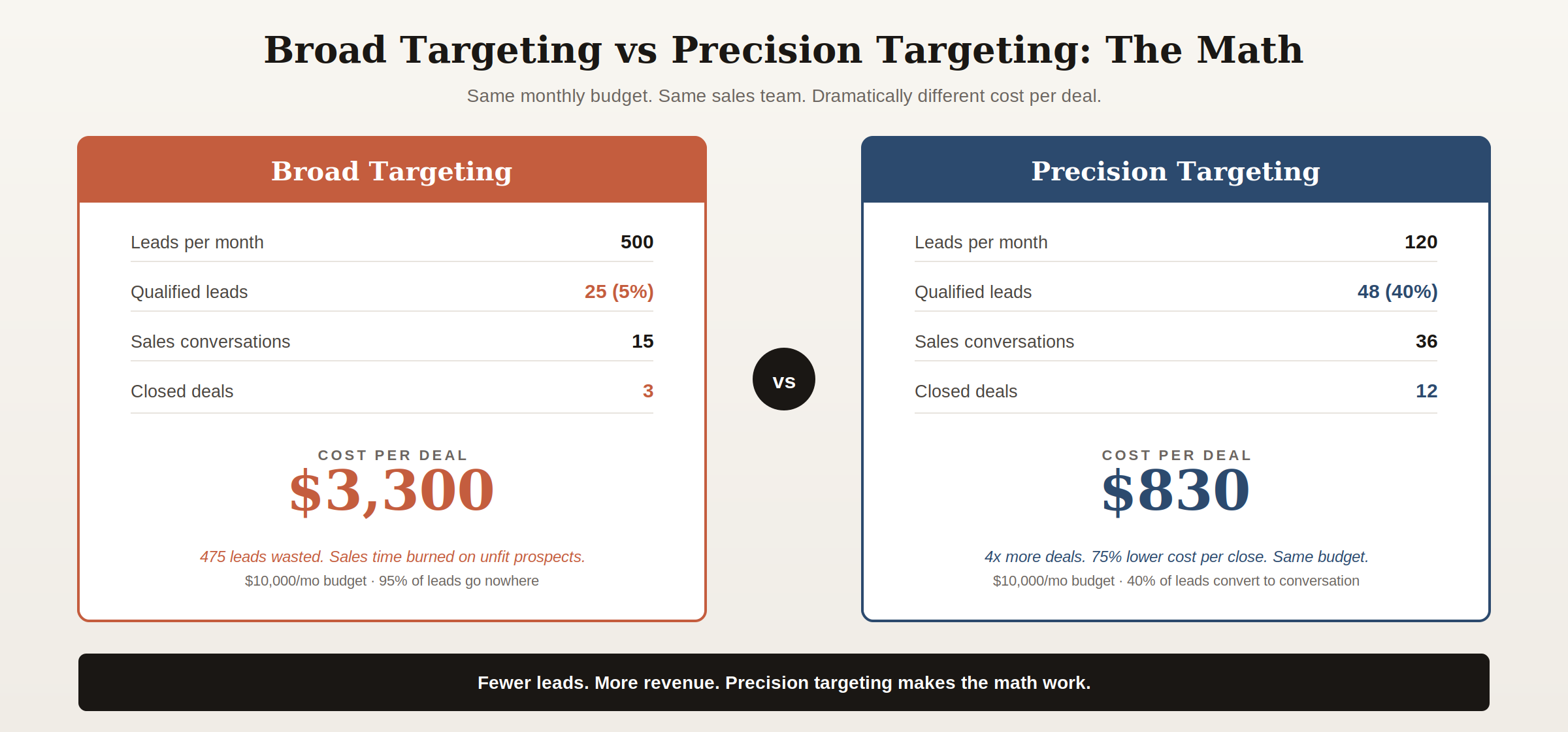
Broad targeting boosts lead volume but lowers quality. Doing this just sends unqualified leads to the sales team, which in turn wastes time.
Precision targeting reduces both waste time and sales friction. Teams focus on fewer buyers but convert more of them. This precision creates efficiency.
Most companies avoid narrow targeting out of fear of missing opportunities and a desire for broad reach. Broad systems might drive high activity, but they also lead to low conversion rates.
A Single Coherent Core Message
High-performing systems do not constantly rotate messages without reason.
Instead of flip-flopping between messaging, they reinforce these three pillars: What problem is being solved, why it matters now, and why this approach works.
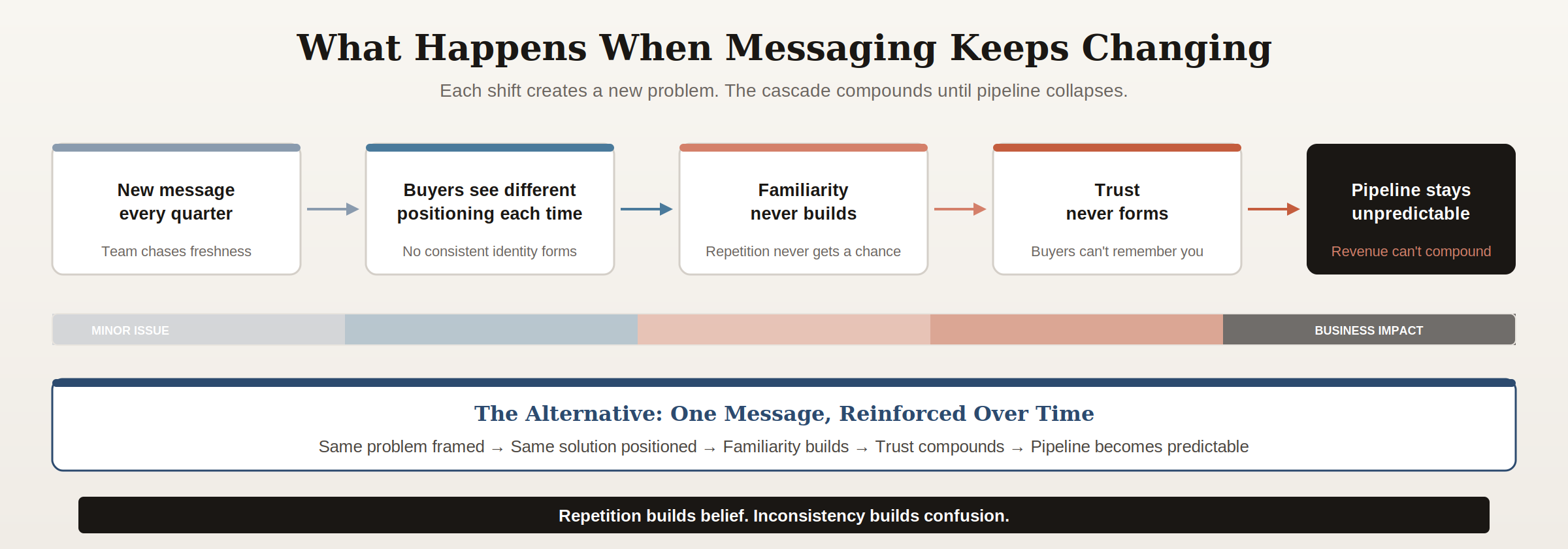
Repetition builds familiarity and trust, but unfortnately teams often change their messaging too often rather than reinforcing core ideas.
Most companies fear repetition, but consistency builds trust.
In the eyes of the consumer, repeating your message builds belief. If you are constantly changing your messaging, it makes it hard for buyers to remember you.
The trust never forms when messaging shifts. Buyers see different positioning. Different promises made. Different problems addressed.
A Trust Building Asset That Pre-Sells Understanding
Strong systems never send cold prospects straight to sales calls.
Instead, they use digital assets to educate prospects, both reframing the problem and preparing them for qualification. This education is a critical step linking targeted messaging to the trust required for smooth sales handoff.
Examples of digital assets include:
- In-depth content, such as articles and long-form videos
- Diagnostic tools such as surveys
- Case studies ideally focus on fixing the exact problem a client faces
- Educational sequences that build on top of each other
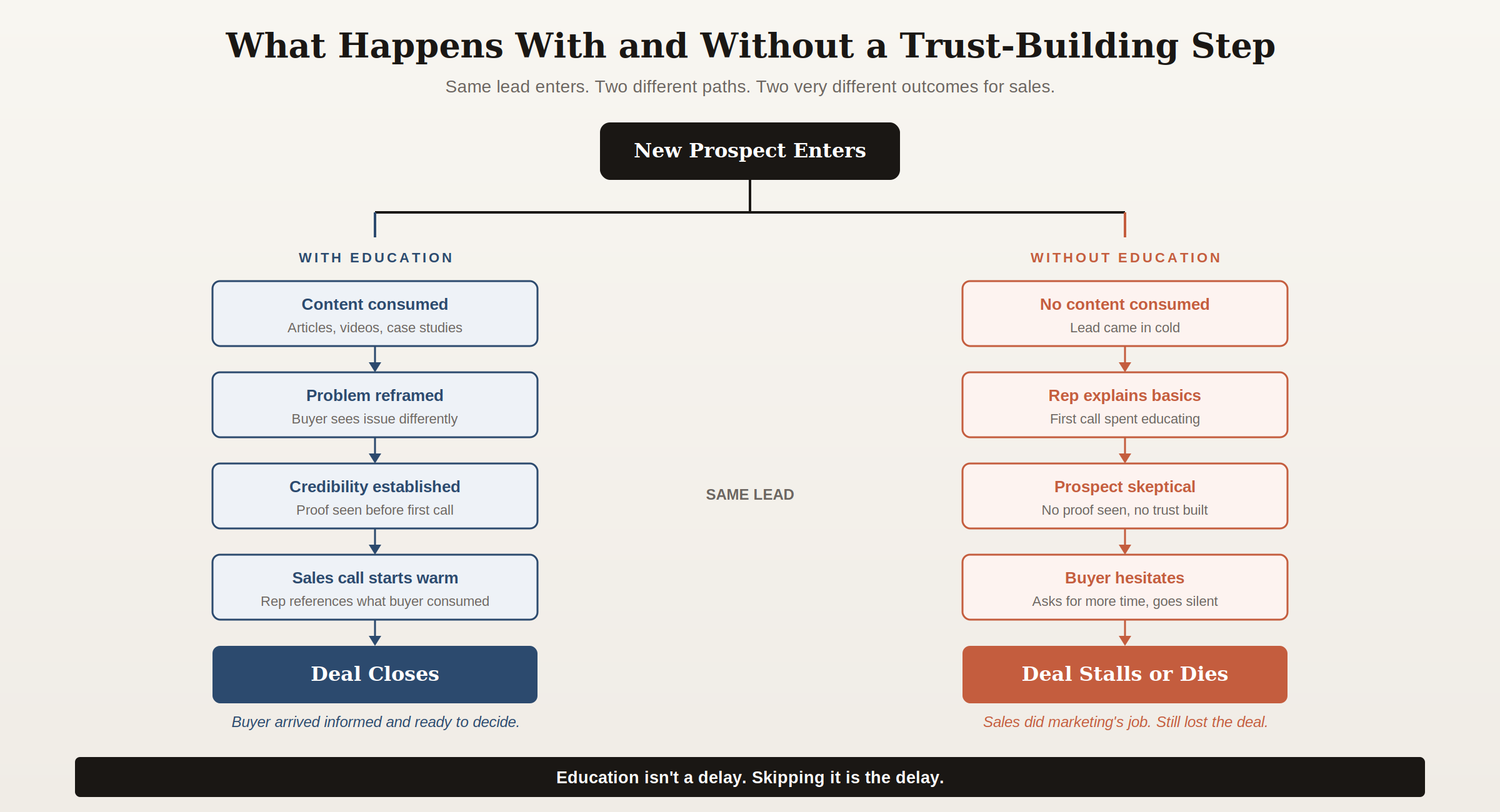
This is a frequent failure point for most businesses. Teams skip education and push calls too early, so trust with buyers never builds.
Most companies want quick conversations, seeing education as a delay. Yet unqualified, uneducated prospects waste the sales team’s time and hurt conversion rates.
Digital assets do the heavy lifting before the sales call. It explains the problem. It shows the solution. It proves credibility. And by the time sales gets involved, a strong belief has already been established with the prospect.
Intent-Based Qualification, Not Volume-Based Filtering
The best B2B lead generation systems do not chase the highest number of leads.
Instead, they identify these three things: readiness, established fit, and urgency. Knowing this information directly guides the sales approach. This step builds on previous messaging and education, ensuring only qualified leads proceed.
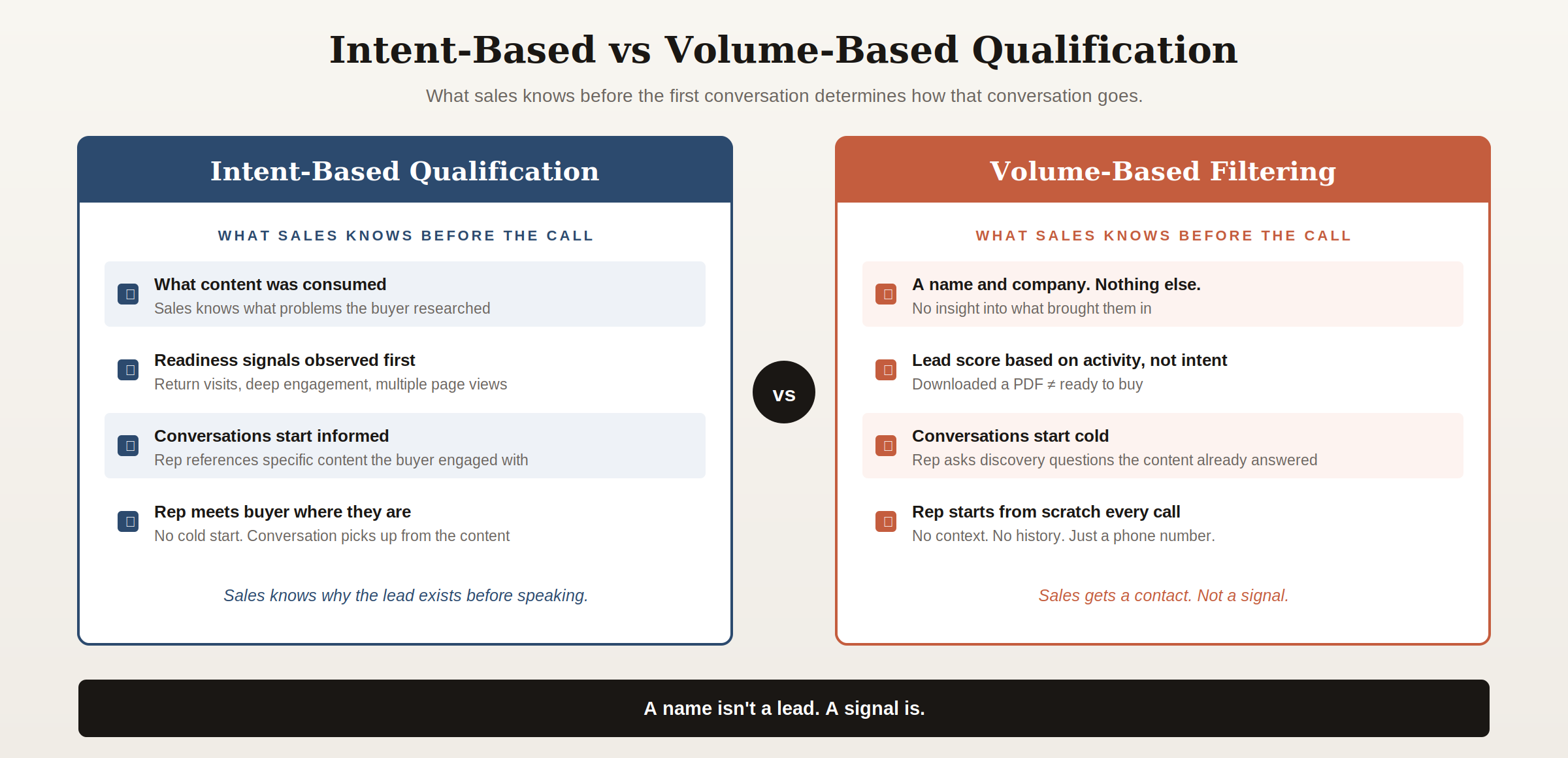
All of this happens through observed online behaviour on your website, landing pages, and downloaded digital assets, not through assumptions. This can be done by integrating pixels that fire when users visit websites or click links embedded in digital assets. By viewing all the pixels that fire and all the signals that occur, the sales team should know exactly why a lead exists before the first conversation. Trackers must be in place to record what actions prospects take, and the sales team can then decipher what this behaviour means.
Companies often measure success by the number of leads.
Most companies chase lead count across the board because, in the eyes of the stakeholders, more leads equal more opportunities. Higher numbers look productive. But volume without intent is a waste.
What matters is a clear signal. Did they consume content created by marketing? Did they return to the same page multiple times? Did they engage deeply with the material posted?
These actions indicate readiness.
Knowing what content they consumed provides the sales team with the necessary context.
We don’t want just a name and company. What we want is:
- What content was consumed by prospects?
- What pages were visited?
- What problems were researched?
This way the conversation starts informed instead of cold.
Predictable Sales Handoff
This final step matters more than most teams realize.
High-performing systems ensure that the sales team understands the context established by earlier steps. What were the previous targeting, education, and qualifications, and how can this inform the sales team about the timing and fit of the prospect
Poor handoffs can destroy trust if sales receive leads without knowing the history. When this happens, the disconnect breaks conversations, leaving buyers confused rather than supported.
Most companies treat handoff as automatic. Marketing generates leads. Lead goes to sales. Sales start with cold outreach. But if you tracked the buyer, you would already know that they have formed a certain belief from your digital assets.
They consumed specific content, engaged with certain messages, and showed interest in particular problems. Sales needs this information before reaching out to a prospect.
When the handoff includes shared context, conversations start warmer. Sales references content consumed. Sales addresses problems researched. Sales then meets the buyer where they are in their journey.
The Best Lead Generation Systems Are Buyer Aligned
Platforms change over time, but buyer psychology does not fundamentally change.
High-performing systems align around:
- How buyers research options
- When they seek the validation needed
- Where hesitation appears in the journey.
The system is designed to adapt as platforms shift, with its core components remaining connected and adaptable. As new channels are layered in or old ones phased out, the underlying system logic keeps all components aligned for steady results.
The foundation should stay stable over time. Buyers still need education before commitment. They still seek proof before trust forms. They still hesitate before major decisions.
Most companies rebuild systems when platforms change. LinkedIn updates its algorithm. Google changes search ranking. Email deliverability shifts. So they start over from scratch.
But buyer-aligned systems survive platform changes. The logic stays intact. The sequencing is consistent. Only the distribution method changes.
The Bottom Line on This
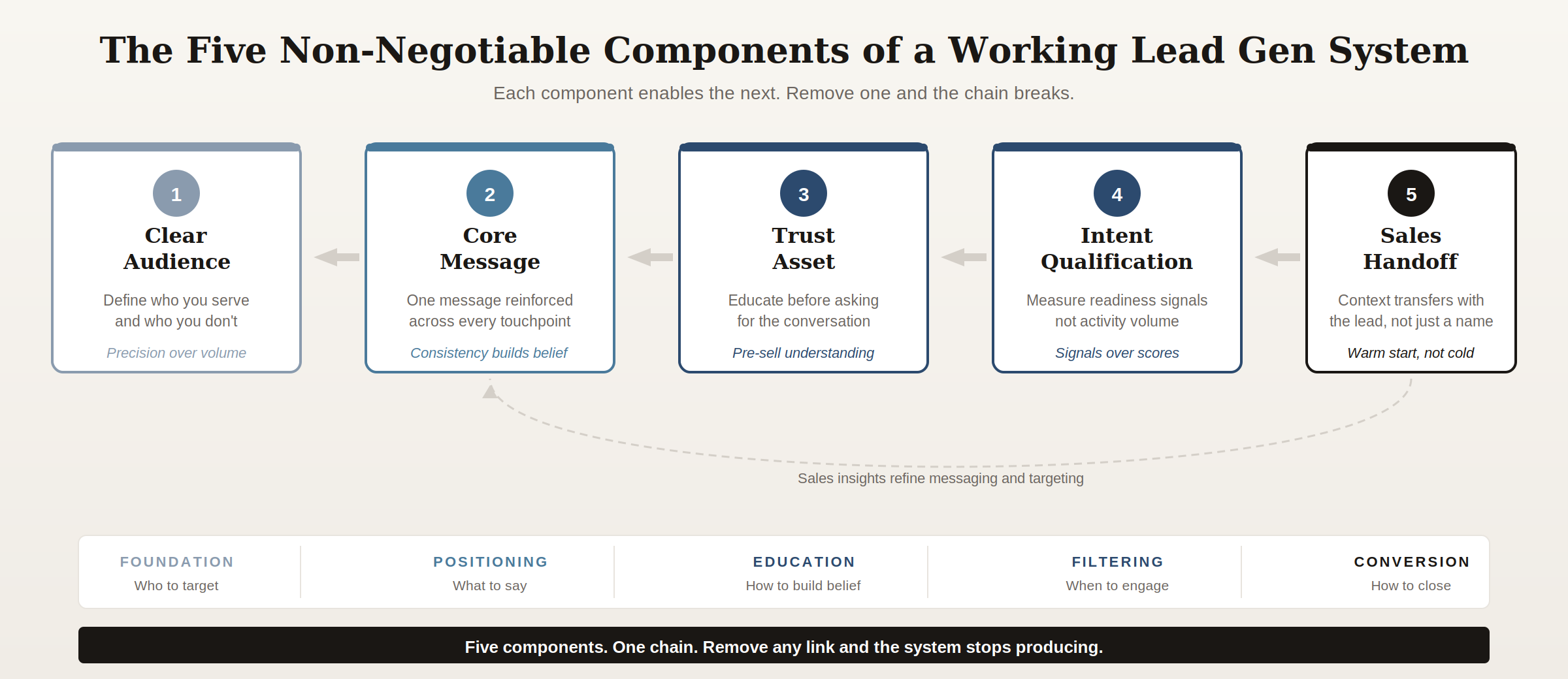
The best lead generation systems for B2B companies are not defined by channels or tools; they are defined by the structures and systems built around them.
These five elements are essential:
- Clear audience targeted.
- Clear message sent.
- Clear trust path created.
- Clear intent-based qualification
- Clear handoff established.
The companies that grow do not search for better tactics, they build systems that make results predictable instead of accidental.
Most companies chase tactics. New channel emerges. They test it immediately. New platform launches. They adopt it quickly.
But tactics without structure will always produce random results.
System builders focus on fundamentals:
- Who are we targeting?
- What do they need to believe?
- How do we build that belief over time?
- When does sales engage?
These questions create the clarity that is essential. The answers to those four questions form the foundation for an optimal lead generation system.
With the right system, results become predictable. Not guaranteed. Predictable. You know what inputs generate what outputs. You understand how the pieces connect. You can forecast what happens next.
The best systems feel obvious in hindsight: Clear targeting. Consistent messaging. Logical sequencing. Clean handoff. But most companies never build them.
What to Do Before Adding Another Lead Generation Tactic
Before launching a new channel, hiring another vendor, or chasing the next lead source, pause and step back from activity.
Questions you need to answer:
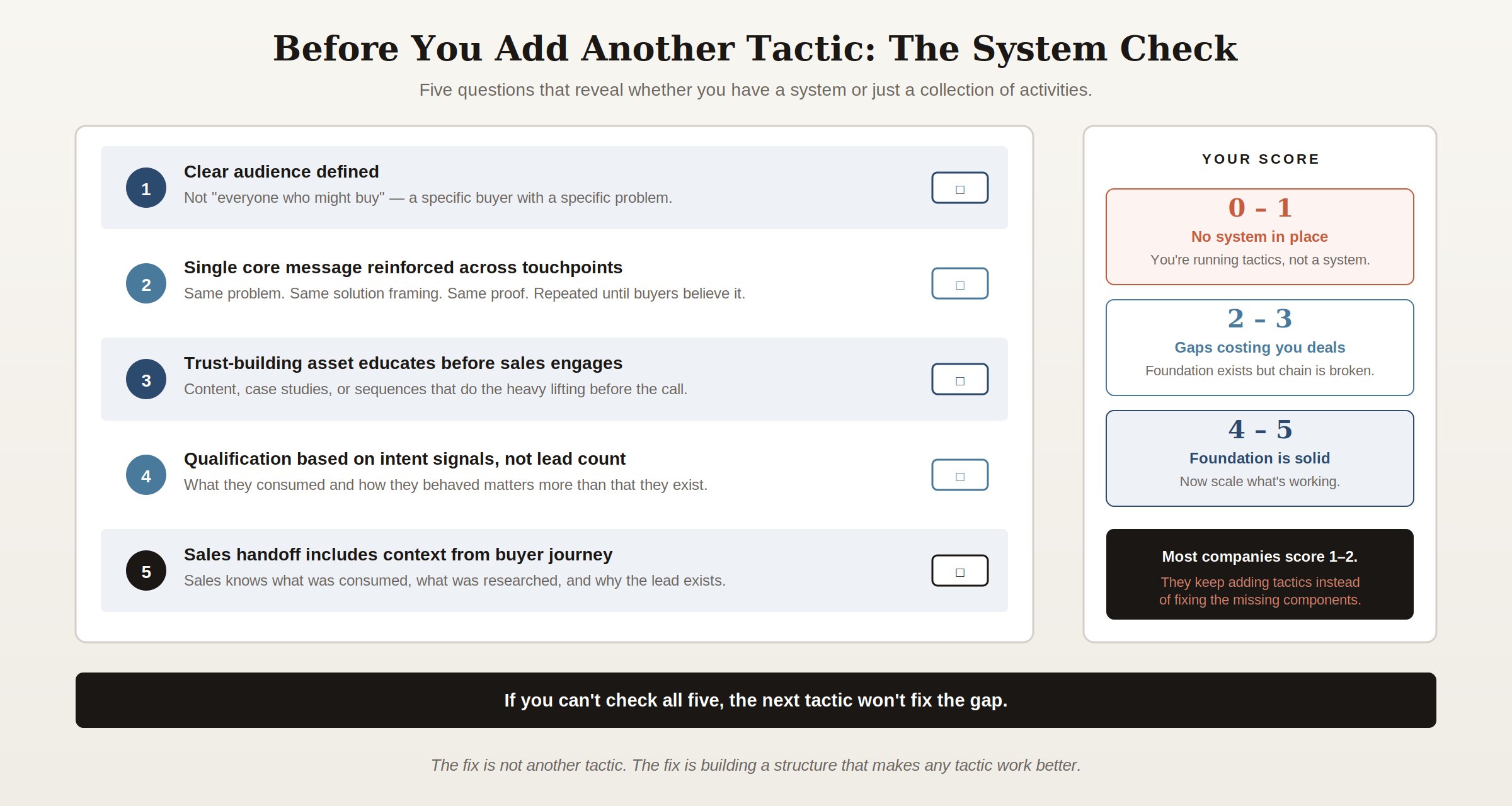
- Do we have a clear system in place, or just a collection of tactics?
- Are buyers educated and confident before sales ever engage with them?
- If we suddenly doubled traffic tomorrow, would conversions improve or break down?
Lead generation should never depend on a channel; it should depend on a system and tracking buyer readiness.
Growth slows when systems are built around volume instead of buyer readiness.
Before investing more time or budget, define your core audience clearly and target it. Reinforce a single message across touchpoints used. Ensure trust is built before leads reach the sales team.
Companies add tactics when results slow down. Test new channels. Hire new vendors. Test new sources. But more tactics without systems thinking create chaos.
The fix is not another tactic. The fix is building a structure that makes any tactic work better.
If you want help designing a lead generation system that produces consistent, qualified demand instead of unpredictable spikes, diagnosing where your current setup is leaking momentum, or rebuilding your approach around buyer decisions rather than platforms, reach out to us directly. We can help you turn lead generation into a reliable growth engine instead of a recurring fire drill.