
How to Tell If Your Marketing Is Helping or Hurting Sales

This question usually comes up after the frustration of a failed marketing campaign or when a tactic that was implemented didn’t go as planned.
It always starts the same way: leads flow in, activity grows, and the dashboard looks promising. At a glance, everything seems productive, but the real question is whether all this activity is helping sales close more deals.
Upon further inspection, when you talk to sales directly, their tone shifts completely from what you see in marketing compared to what is actually happening on the sales floor.
The sales team is busy making calls every day, but is skeptical about the quality of the leads in the pipeline. Their conversations drag on longer than they should. Deals may get into the pipeline, but they eventually stall. Overall, the numbers don’t reflect the confidence marketing expects. And when targets miss quarterly numbers, marketing does the same thing, ramping up activity without changing the approach.
The leadership then asks one crucial question of the marketing team:
Is marketing actually making sales more effective, or is it adding friction that sales reps need to overcome?
Most leadership teams believe that poor leads are a volume problem. More leads generated in campaigns, more activity tracked in systems, more campaigns launched, as if quantity alone can resolve deeper marketing issues.
It is not that simple.
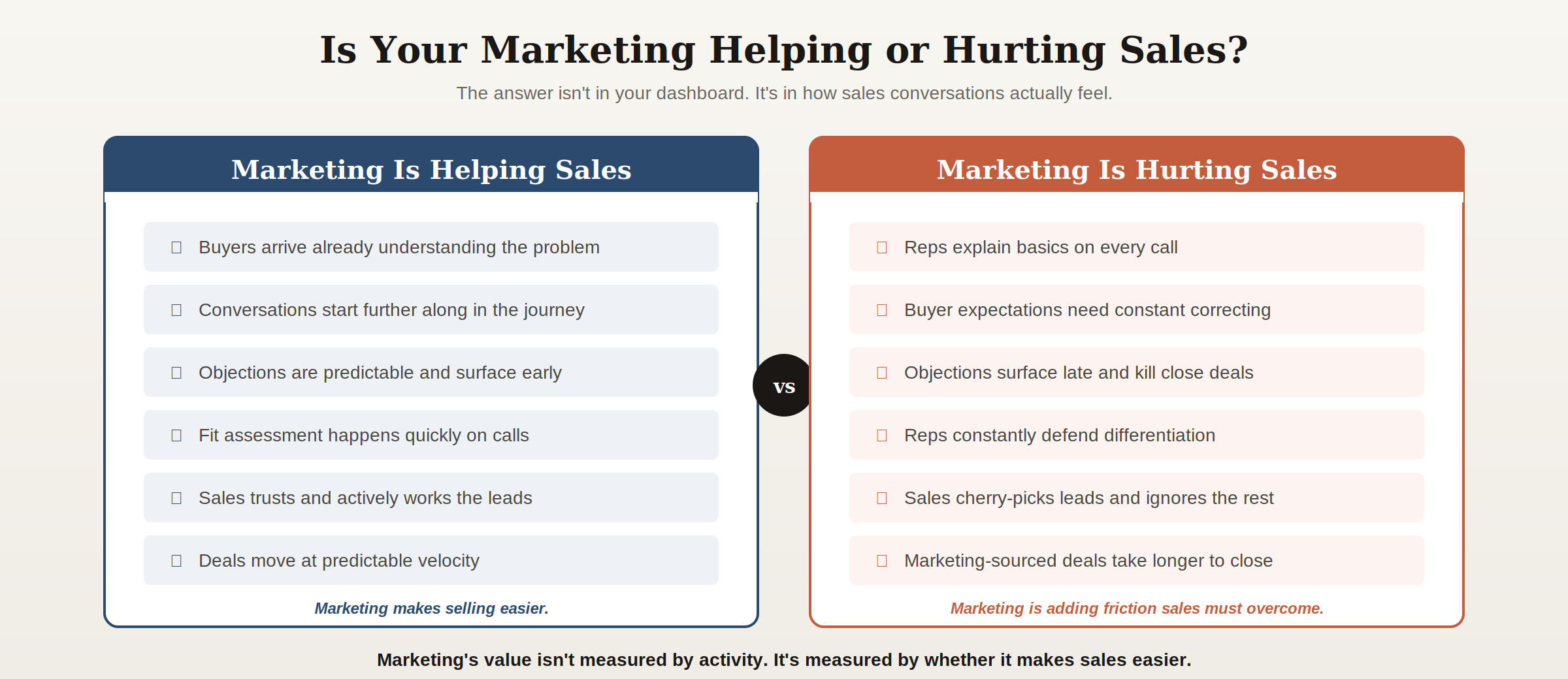
Marketing’s value isn’t determined by activity levels. Its worth depends on whether it reduces friction and helps sales fulfill the organization’s goals.
This article offers a direct, practical method to determine whether marketing is genuinely enabling or hindering sales, cutting through opinions and surface metrics.
Why This Question Is Hard to Answer Honestly
Marketing and sales think about winning differently.
Marketing counts visitors coming to the site, people clicking on things, forms getting filled out, and leads moving through steps.
Sales count how ready people are to buy, what problems they raise on calls, how quickly deals move along, and how many actually close.
When these two groups don’t see things the same way, marketing thinks everything is working great, while sales have a hard time closing deals.
From what I see, that’s where the real problem hides.
The Core Test: Does Marketing Reduce or Increase Friction
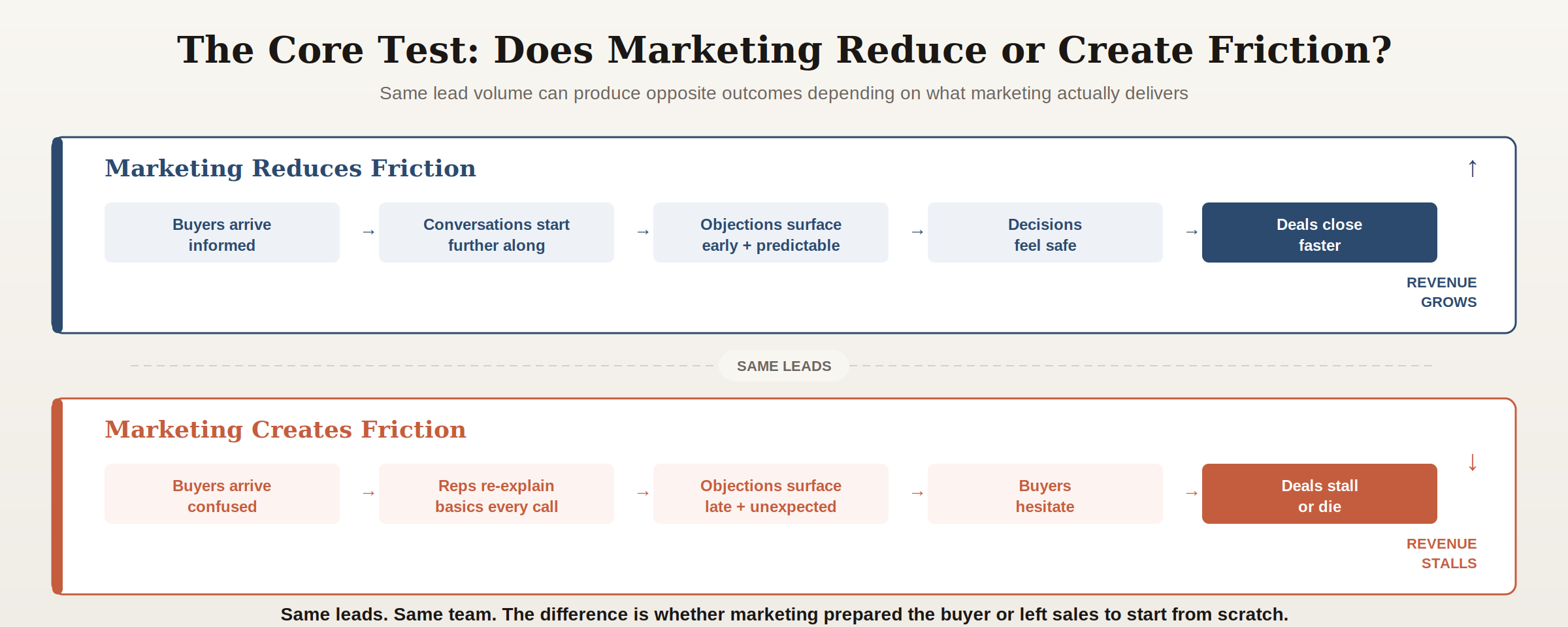
At its core function, marketing should make sales easier to execute.
That means buyers arrive informed about the solution, conversations start later in the journey, objections are predictable, and buyer decisions feel safer.
If marketing increases confusion, then repetition is needed, prospects feel skepticism, and mismatched expectations are created.
Misaligned goals are hurting sales, even though the number of leads looks strong.
The First Signal: Sales Conversation Quality
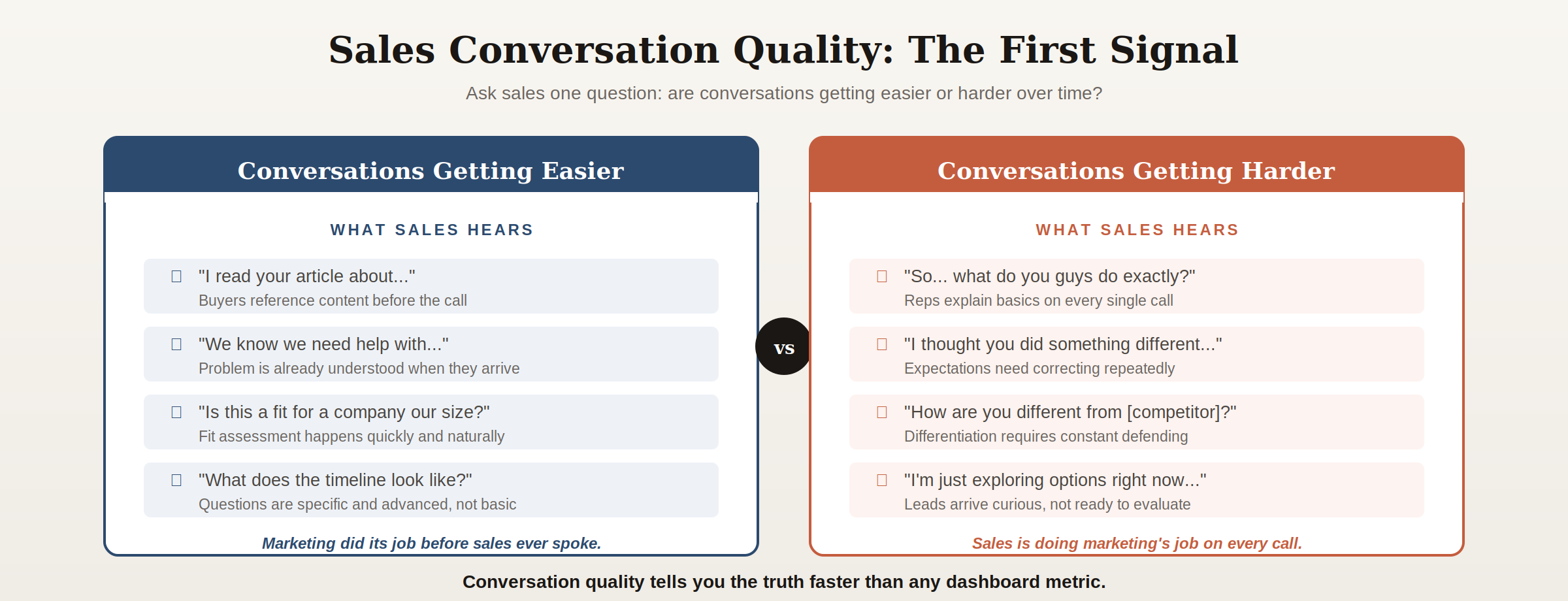
Ask sales this simple question directly: Are talks getting easier or harder over time when contacting buyers daily?
Helping looks like buyers remembering content they saw before. They know the problem already when you talk to them on calls. You figure out whether it’s a good match faster than usual during calls.
Hurting looks like explaining the same basic things over and over again to prospects who have already reached out. Fixing what people thought you did for them repeatedly in conversations. Defending why you’re different all the time during calls with buyers.
How good the conversations are tells you the answer fast.
The Handoff Test Between Teams
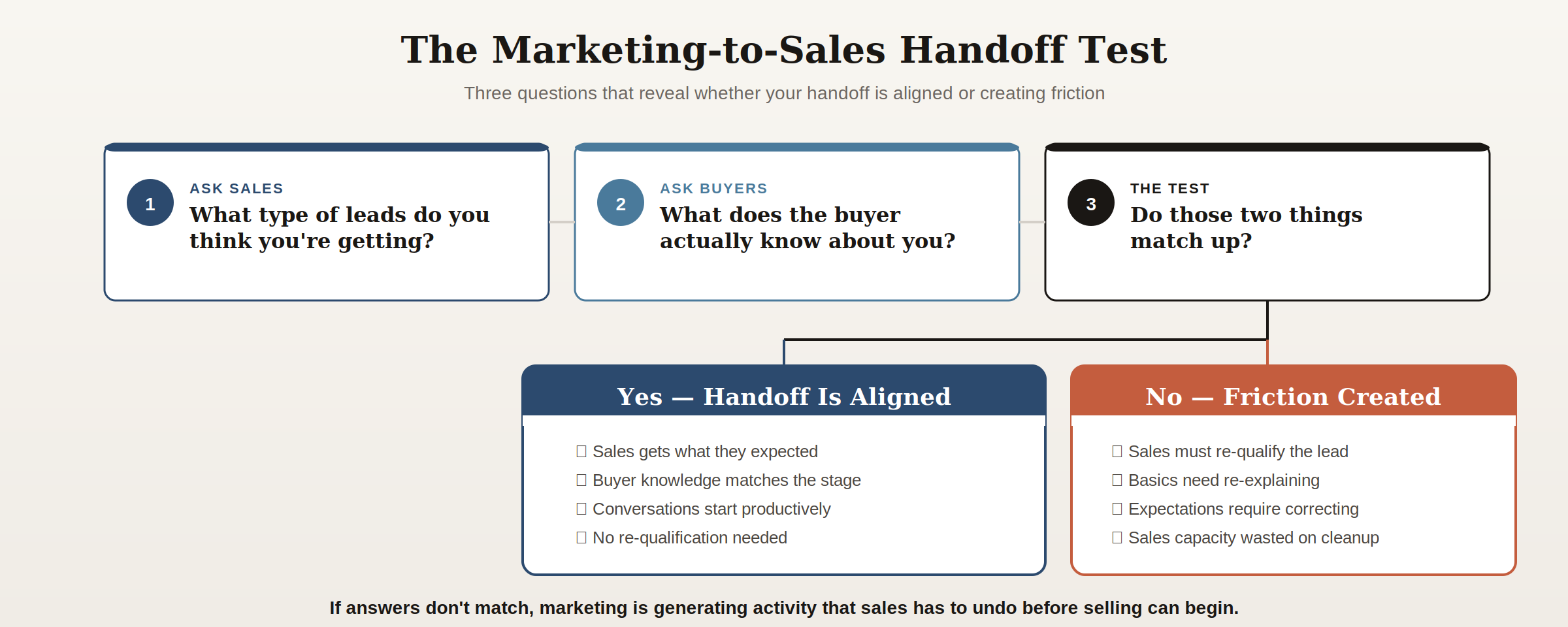
Look at what happens when marketing gives a lead to sales.
Ask these questions:
- What type of leads do sales think they’re getting?
- What does the buyer actually know about you?
- Do those two things match up?
If sales need to check if the lead is real, explain the basics all over again, or fix what the buyer thought you did, marketing is wasting effort and not providing quality leads to the sales team.
Where Marketing Commonly Hurts Sales
Marketing hurts sales when the focus is on more clicks rather than on people who are ready to buy, when it overpromises your capabilities, or when it attracts people who are just curious rather than interested in your services.
In the end, the marketing team needs to stop sending buyers to sales before they’re ready.
I understand that nobody’s trying to mess things up on purpose, but if the marketing system isn’t built correctly, this is going to keep happening.
The Objection Timing Test
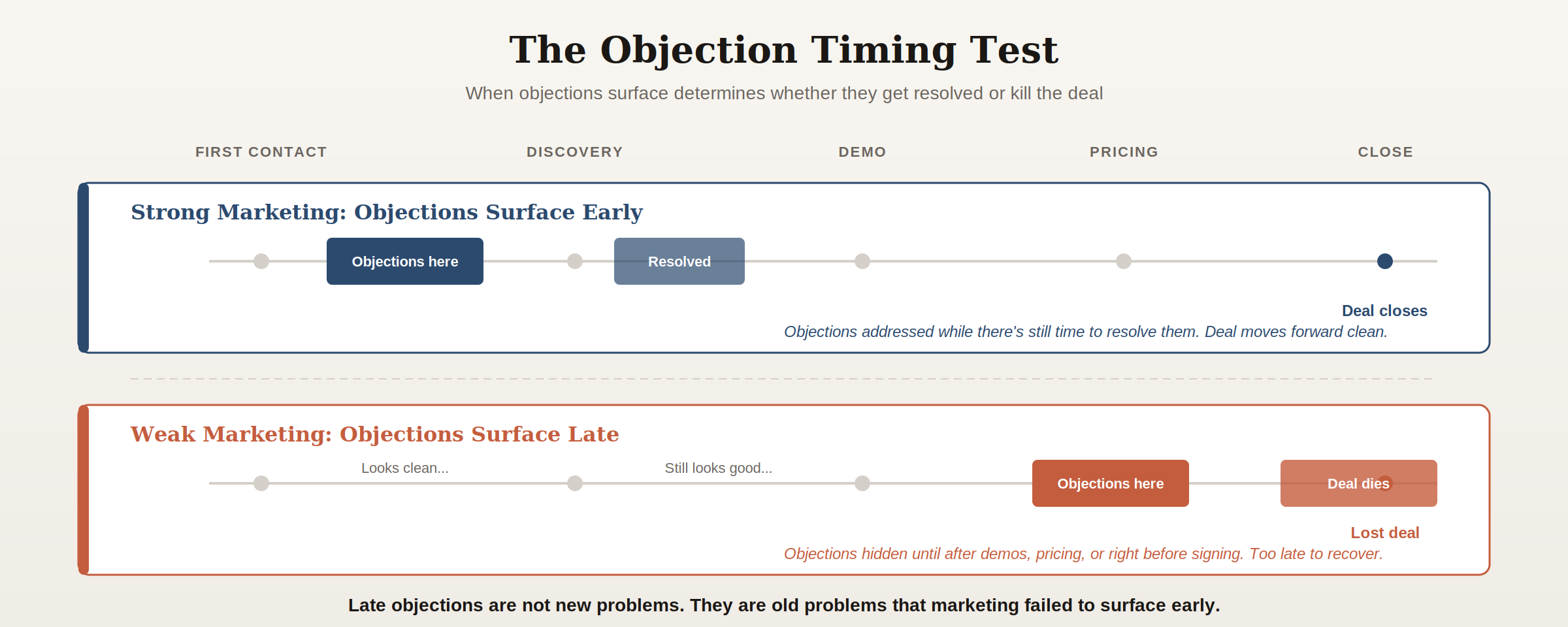
When your marketing is working smoothly, problems become evident earlier. Bad marketing, on the other hand, surpasses them or hides what is actually happening, and you don’t find out till later.
If the same problems keep showing up after demos, after you send pricing, or right before they’re about to sign, marketing is just hiding the issues instead of addressing them up front.
And the unfortunate part is this is what makes the sales process take longer as well as harder for salespeople to close the deal.
The Buyer Readiness Signal
Marketing should define buyer readiness criteria for sales. Things such as:
- buyer awareness
- need urgency
- solution fit
These signals need to be clearly communicated when encountered. This makes the buyer’s intent clear for the sales team.
Ask specifically:
- Can sales identify what buyer actions or information signals clear interest, such as requesting a demo, referencing materials, or outlining business needs?
- Is intent based on observed behaviours rather than assumptions?
If sales representatives cannot point to concrete indicators of why a buyer is interested, the lead handoff process lacks clear signals of readiness and needs improvement.
The Sales Trust Indicator
One of the clearest signals within a company is trust between the marketing and sales teams. You must know whether salespeople actually want to work the leads marketing sends them, or if they only pick a few good ones and ignore the rest. A clear indication that the system is broken is when sales don’t trust what marketing gives them.
The Velocity Check Between Sources
Compare how quickly deals move when marketing finds them versus when they come from other sources, such as referrals or sales outreach. If the deals marketing brings in take longer to close, something earlier in the process is messed up. How fast deals move tells you the truth quicker than just counting how many leads you got from what I’ve seen.
The Alignment Question Teams Avoid
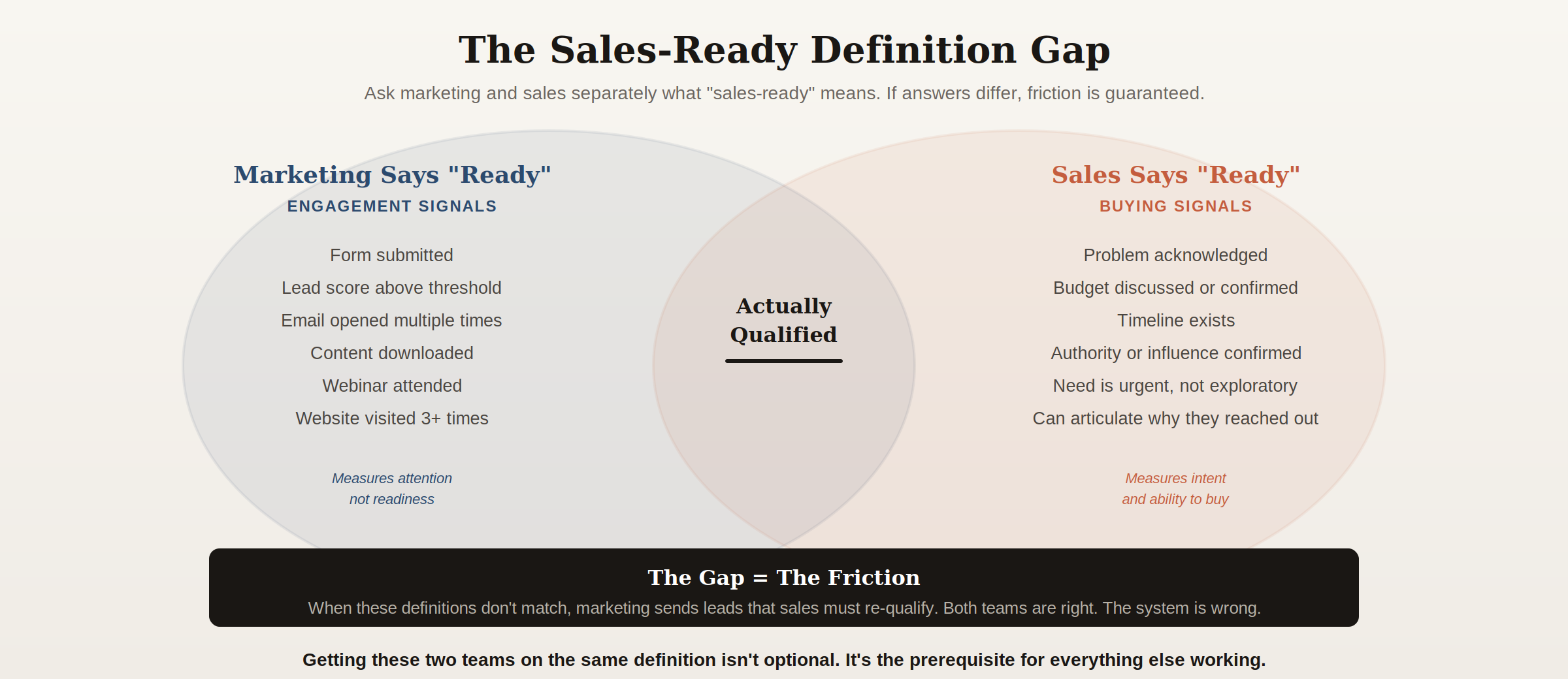
Ask marketing and sales separately what a sales-ready lead actually means to them. If their answers differ, marketing is just guessing in the dark about what to send. Getting these two teams on the same page isn’t optional if you want things to work.
The Role of Sales Enablement
Marketing that actually helps gives sales reps the background info they need about each buyer, supports them when buyers are making decisions, and backs up the trust they’re building on calls.
Marketing that hurts sales leaves reps with unqualified leads or leads lacking the background information they need.
The Feedback Loop Test
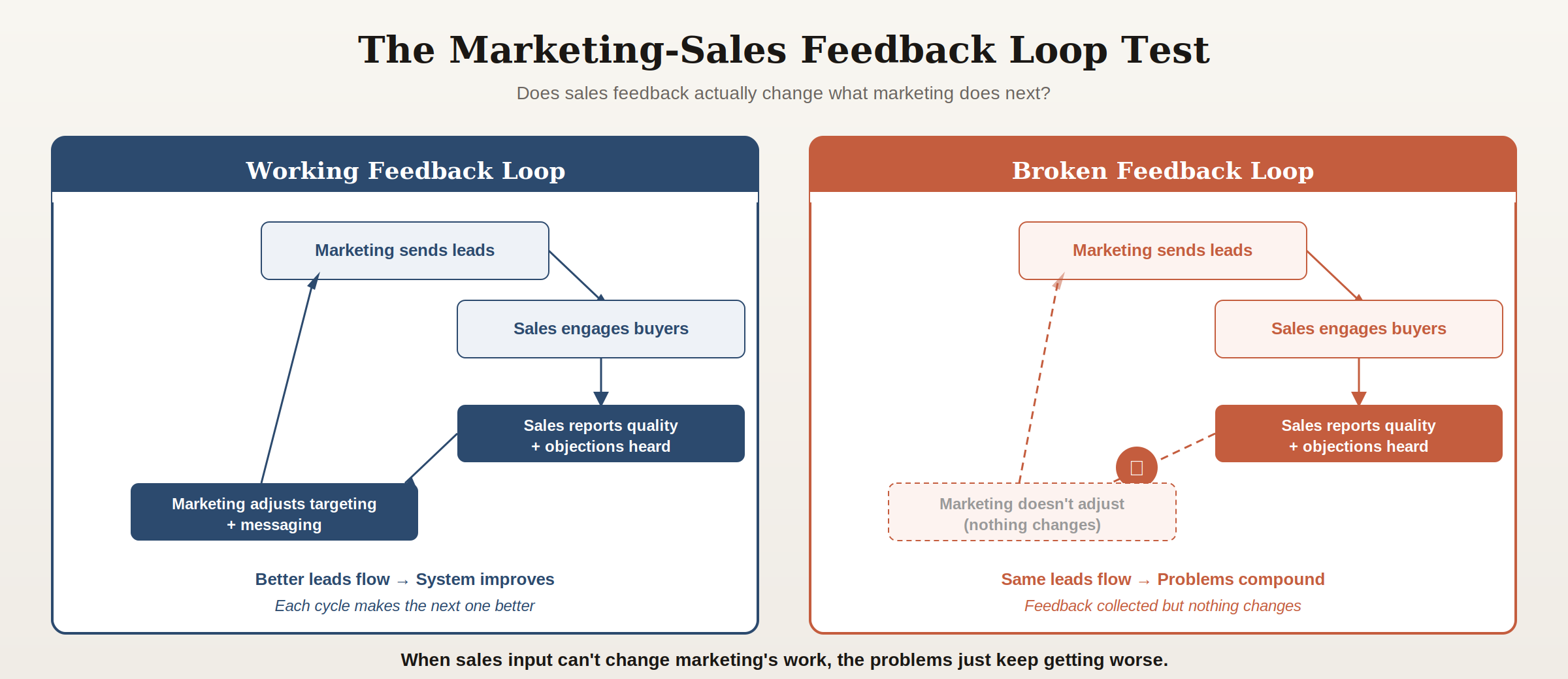
Ask whether the feedback sales give actually changes what marketing does next, or whether marketing just keeps doing the same stuff they feel is important. When there’s no real way for sales input to change marketing’s work, the problems just keep getting worse and sales suffer.
How to Tell Which Side You Are On
Take an honest look at your team’s process. Ask yourself and your teams the tough questions outlined above. If you see signs that your marketing is hurting sales, take action by starting a direct conversation between the teams to align them on definitions and goals, adjust how you qualify leads, and set up a feedback loop to improve continuously.
The answer is sitting right there if you actually look at what’s happening on sales calls and in the pipeline.
The Real Role of Marketing at This Stage
Remember that marketing’s job isn’t to close deals for you. It’s supposed to make buyers less confused about what you do, help them understand what to expect if they work with you, and get them ready to actually make a decision when sales talks to them.
When marketing does this work right, sales can move deals forward way faster.
The whole point is to make the sales team’s job easier, not to generate numbers that look good on paper.
Final Perspective on This
If marketing activity keeps rising while sales confidence keeps falling, something’s broken between the two teams.
Marketing should always make selling easier, not harder, for reps to close deals.
If it’s not doing that job, it’s not helping your business grow, no matter how impressive the numbers look or how many leads are coming in every month.
What to Do If Marketing Might Be Hurting Sales
Before adding more campaigns, content, or automation tools, pause to assess how sales actually use what marketing sends.
Ask yourself these questions:
- Are sales conversations starting later in the buyer’s journey, or are reps still explaining the basics all over again?
- Do buyers show up with realistic expectations about what you do, or do they need major corrections during the first call?
- Are objections coming up early in the process where you can handle them, or are they popping up late and killing deals that seemed close?
The overall indicator of your marketing team’s success is whether what they do actually helps sales and eliminates confusion before the first conversation between the buyer and the rep.
Before ramping up new activity, figure out together what sales-ready actually means to both teams, bring objections to the surface earlier, and design marketing to focus on the right buyers, not bring in more people who won’t buy.
If you want help figuring out whether your marketing is speeding up sales or quietly slowing them down, reach out to us directly. We can help you get marketing and sales working together so confidence builds among reps, deals move faster through the pipeline, and close rates go up as marketing compounds.

